
 Services
 Conditions We Treat
 Contact
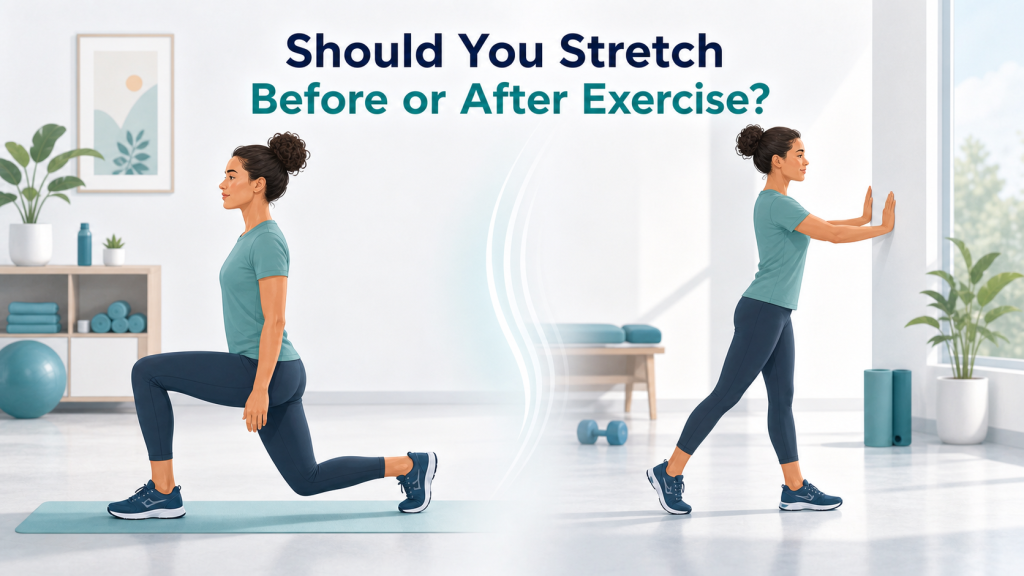
Should you stretch before or after exercise? For most people, dynamic movement is the better fit before a workout, while gentle static stretching is often more useful after exercise or during a separate flexibility session. If you are returning to sport or dealing with a recurring restriction, sports rehabilitation can help match your warm-up to the activity your body needs to perform.
Stretching and warming up are related, but they are not the same thing. A good warm-up gradually raises your heart rate, moves your joints through useful ranges, and rehearses the movements ahead. Stretching can be one part of that plan, but timing and technique matter.
Use controlled dynamic movements before exercise. Save longer static holds for after exercise or a separate flexibility session. If a specific activity requires extra range, a brief static stretch can still be used before exercise, followed by dynamic movement that prepares you to perform.
Should you stretch before or after exercise?
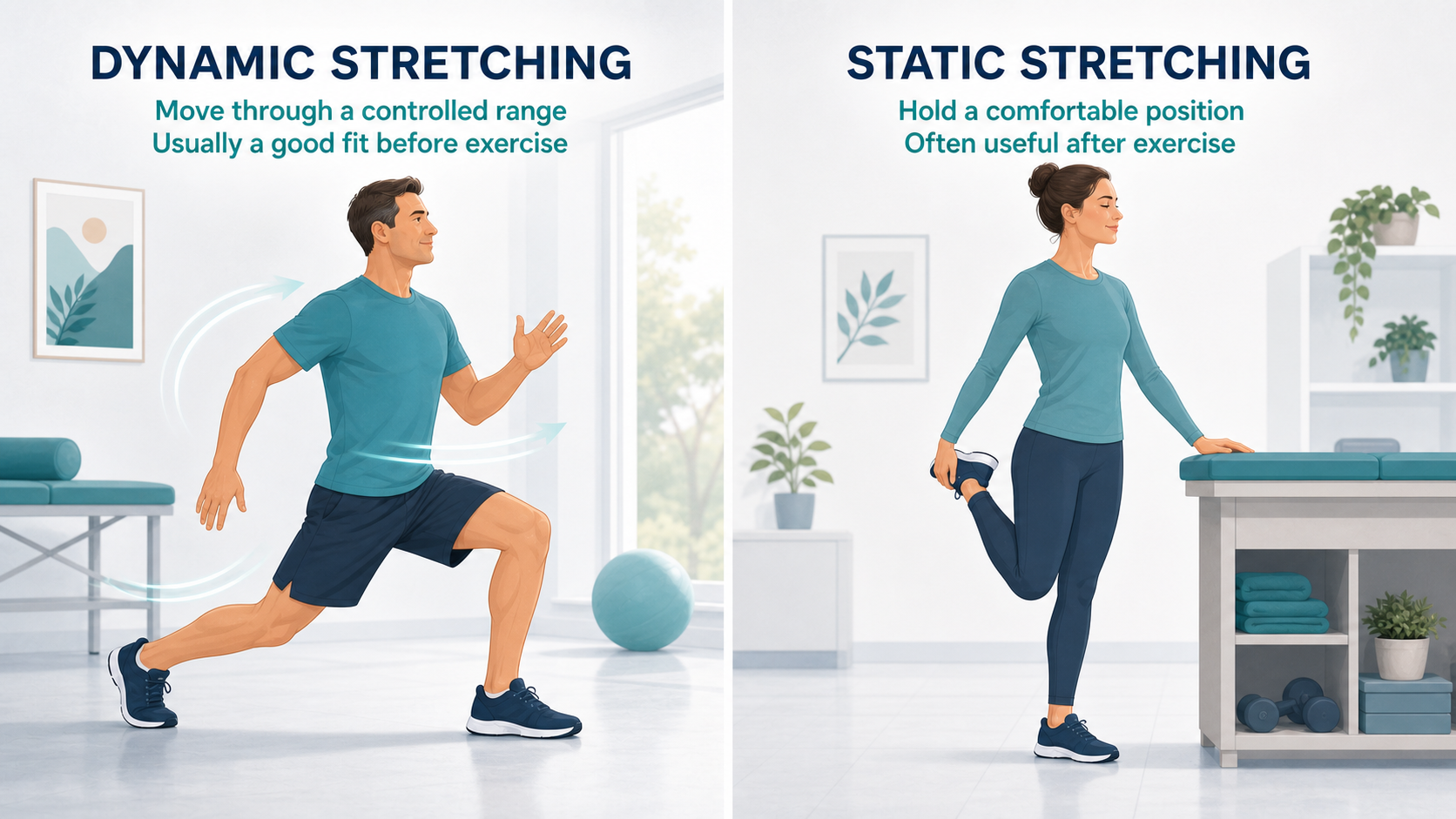
The best time depends on what you want the stretch to accomplish. Dynamic stretching uses controlled movement through a range. Static stretching means moving into a comfortable position and holding it for a period of time.
| Goal | Better starting choice | Why |
|---|---|---|
| Prepare to run, lift, play, or exercise | Dynamic movement | It raises temperature and rehearses the activity. |
| Work on flexibility | Static stretching when warm | Warm muscles usually tolerate comfortable holds better. |
| Settle down after training | Easy movement, then optional static stretching | It provides a gradual transition out of exercise. |
Mayo Clinic stretching guidance recommends warming the body before stretching and notes that stretching is often most comfortable after activity. A research review comparing static and dynamic stretching also found that dynamic activity generally fits better when the immediate goal is speed, power, or athletic performance.
What to do before exercise
Before exercise, think about preparation rather than flexibility alone. Start with easy whole-body movement, add controlled motions that use the joints involved, and finish with a few rehearsals of the activity you are about to do.
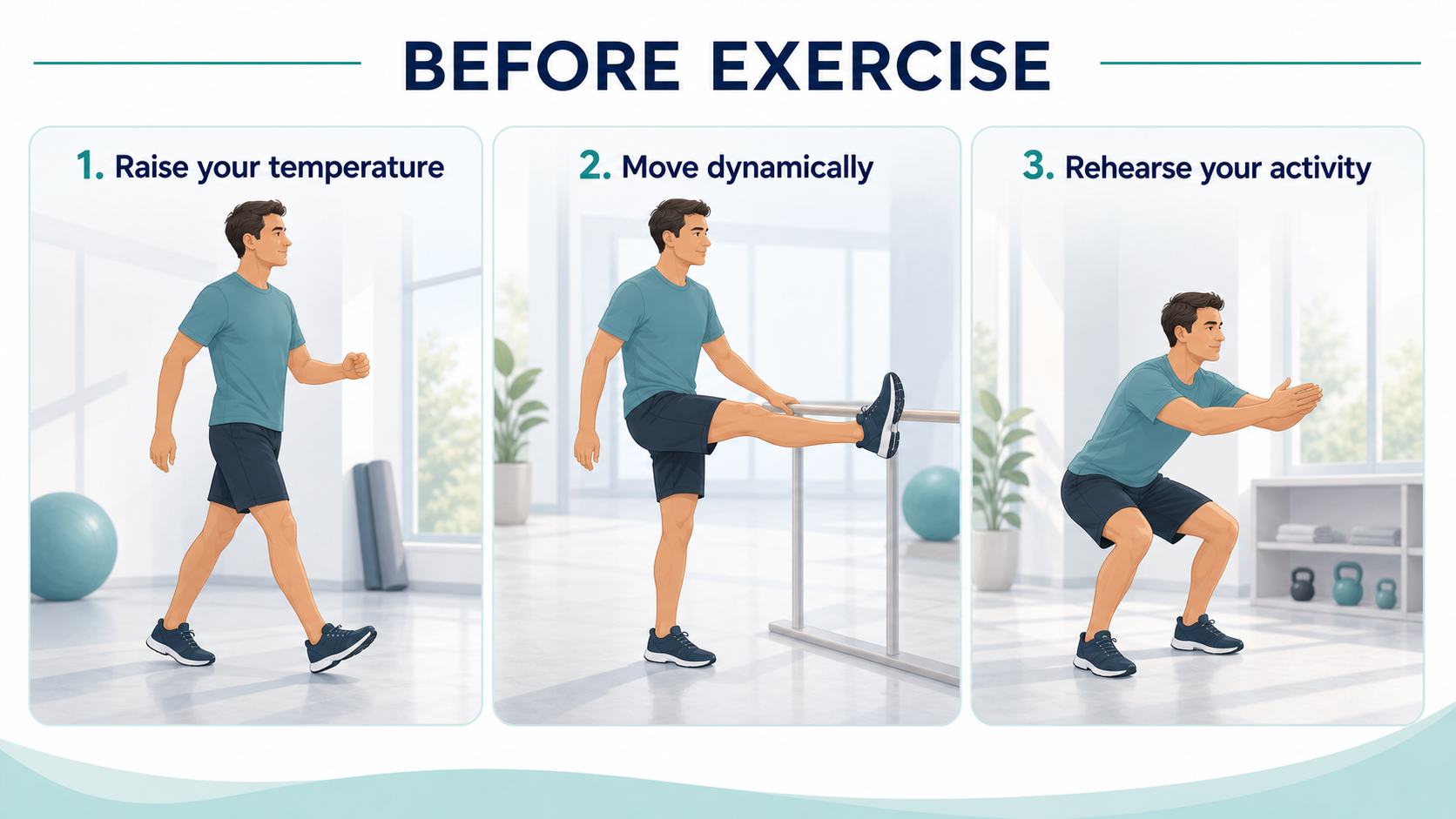
A runner might begin with brisk walking, then use controlled leg swings, calf raises, and short easy strides. Someone preparing to lift might walk or cycle, move through bodyweight squats, and rehearse the lift with a light load. A tennis player might add shoulder circles, trunk rotation, side steps, and easy practice swings. Our guide to shoulder mobility for tennis explains why the shoulder, upper back, hips, and timing all need to work together.
A warm Florida afternoon can make your skin feel warm, but outdoor temperature does not replace a movement-specific warm-up. Your heart rate, coordination, joints, and nervous system still benefit from a gradual rehearsal before tennis, pickleball, running, or strength training.
A simple warm-up may take 5 to 10 minutes. It should leave you feeling more ready, not tired. Begin calmly and increase the range or speed as the body responds.
Can you static stretch before a workout?
Yes, but it should have a reason. Static stretching before exercise is not automatically harmful. It may be useful when a particular movement requires more range, or when a brief comfortable hold helps you access a position that otherwise feels restricted.
The concern is mostly about long or intense static holds immediately before activities that demand maximum strength, speed, or power. Some research has found a temporary performance reduction in those situations. The effect depends on stretch duration, intensity, and what happens next.
If you use a static stretch before exercise, follow it with controlled dynamic movement and a rehearsal of the real task. The body should leave the warm-up feeling alert and coordinated, not loose but sleepy.
Activities such as gymnastics, dance, martial arts, and some overhead sports may require more flexibility than walking or general strength training. The right order should reflect the activity instead of following one rule for everyone.
What stretching after exercise can and cannot do
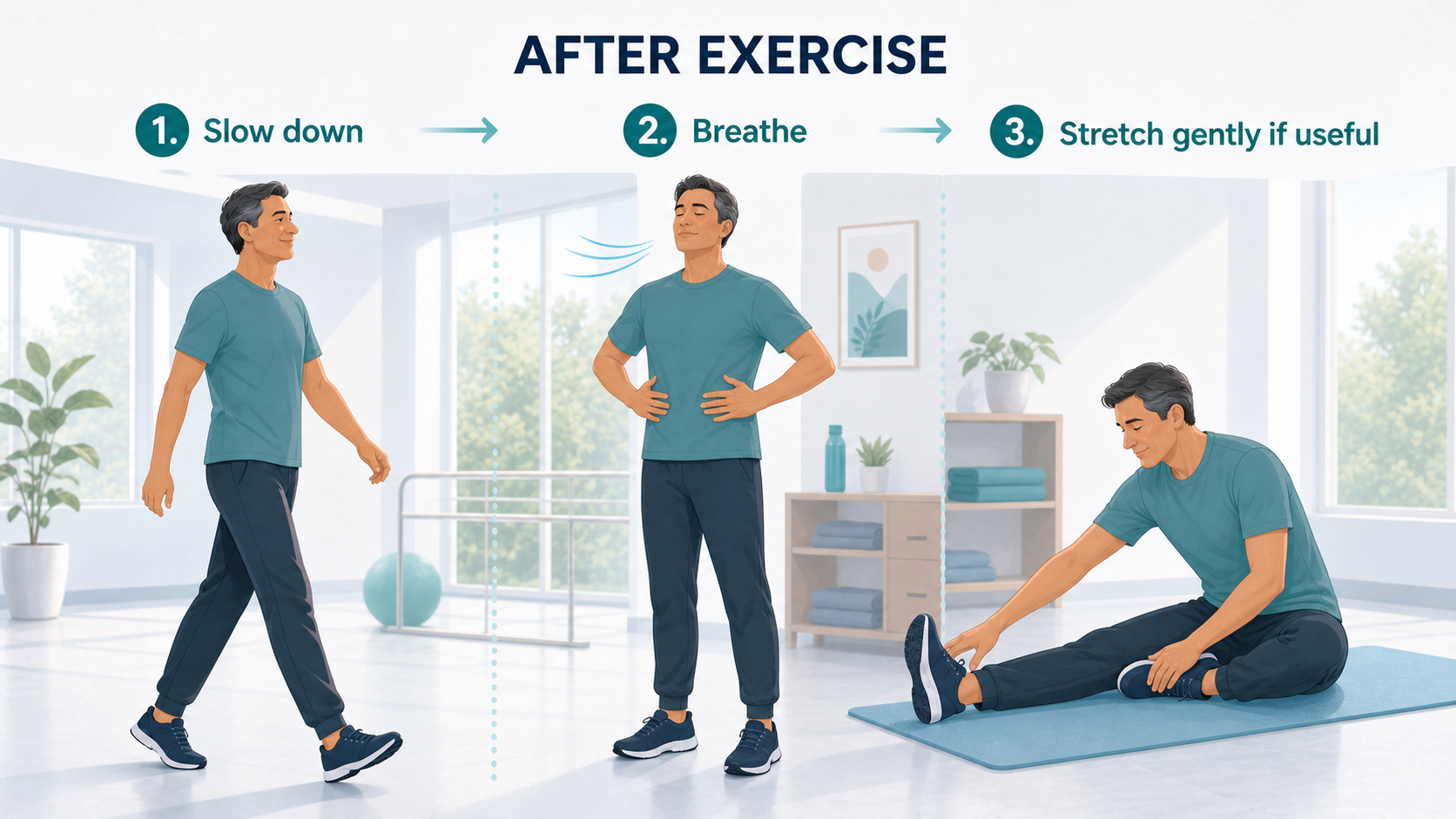
After exercise, a short period of slower movement can help your breathing and heart rate settle. Because the body is already warm, this may also be a comfortable time to work on flexibility with gentle static stretching.
Regular stretching can improve flexibility and tolerance to a position over time. However, stretching after one workout is not a reliable way to prevent all next-day soreness. A systematic review of stretching found little meaningful reduction in muscle soreness during the days after exercise.
That does not make post-workout stretching useless. It can feel calming, help you practice a range you want to maintain, and give you a moment to notice how your body responded. It simply should not carry the full responsibility for recovery. Sleep, hydration, nutrition, appropriate training load, and gradual progression matter too.
If you feel tight mostly after being still, our article about stiffness after sitting explains why movement can change the sensation even when aggressive stretching is not needed.
A simple stretching routine around exercise
The following framework is a starting point, not a rigid prescription. Adjust it to your fitness level, activity, and health history.
Before exercise
- Spend 5 to 10 minutes walking, cycling, or moving easily.
- Choose 3 to 5 dynamic movements for the joints and muscles you will use.
- Perform each movement slowly at first, then gradually increase the useful range.
- Finish with a lighter or slower version of the actual activity.
After exercise
- Slow down for several minutes instead of stopping suddenly.
- Let your breathing settle and notice any unusual symptoms.
- If flexibility is a goal, hold a gentle stretch for about 20 to 30 seconds.
- Use mild tension, not sharp pain, pinching, numbness, or tingling.
- Skip a stretch that makes the area feel worse or less stable.
Consistency matters more than forcing a deeper position. Two or three comfortable flexibility sessions each week may be more useful than one intense stretching session when the body is already irritated.
When stretching is not enough
A tight feeling does not always mean a muscle needs to be lengthened. The sensation can also be related to fatigue, weakness, joint mobility, nerve sensitivity, protective muscle guarding, or a rapid increase in activity.
Stop and get appropriate advice if stretching causes sharp pain, repeated joint pinching, new numbness or tingling, dizziness, unusual weakness, or increasing swelling. A recent injury, surgery, or unstable joint may also require a more specific plan.
If you are unsure whether to rest or stay active, read our guide on rest versus movement when something hurts. If the same restriction keeps returning, physical therapy can look at range of motion, strength, control, coordination, and training load instead of assuming that one muscle is simply too tight.
At Sophysio, the goal is to help you prepare for the activities you enjoy with a plan that fits your body. You can book an appointment or contact Sophysio to discuss a recurring mobility or exercise concern.
FAQs
No. A warm-up raises body temperature, increases circulation, and rehearses the movements ahead. Stretching may be one part of a warm-up, but it should not be the only part.
Dynamic stretching is usually the better starting choice because it moves the joints through a controlled range while keeping the body active. The movements should match the workout or sport.
You can use brief, comfortable static stretches when they serve a specific mobility goal. Follow them with dynamic movement and lighter practice sets before heavier lifting.
Not reliably. Post-workout stretching may feel good and support flexibility practice, but research suggests it has little effect on next-day muscle soreness by itself.
A comfortable hold of about 20 to 30 seconds is a reasonable starting point for many adults. Do not force the position, and stop if you feel sharp pain, pinching, numbness, or tingling.
Keep reading
- How your shoulder mobility affects your tennis serve
- Is it better to rest or keep moving when something hurts?
- Why you feel stiff in the morning but better later in the day
- How stress can show up as body tension
Sources
- Mayo Clinic, Stretching: Focus on flexibility
- Behm and Chaouachi, Review of static and dynamic stretching
- Systematic review of stretching, soreness, and injury risk