
 Services
 Conditions We Treat
 Contact
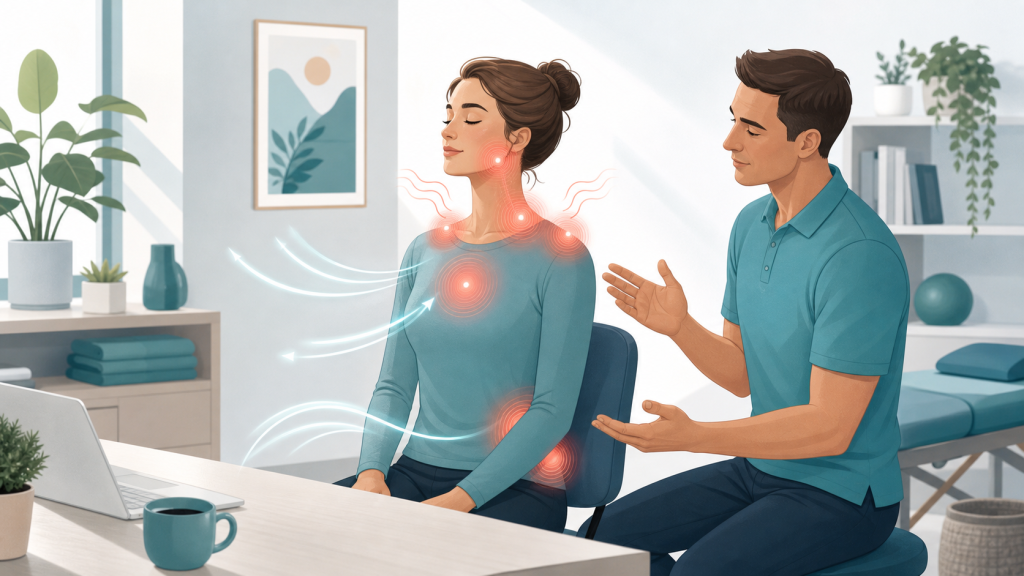
Stress can show up as body tension because the brain, breathing, muscles, and nervous system are connected. For some people it feels like tight traps, jaw clenching, neck pressure, low back guarding, or a heavy chest. If tension keeps returning or starts limiting your day, physical therapy can help you understand the movement side of the pattern.
Stress does not only live in your thoughts. It can change breathing, muscle tone, posture, sleep, and how sensitive your body feels. Gentle movement, breathing, strength, and better daily load habits can help reduce the loop.
In this article
Why stress can feel physical
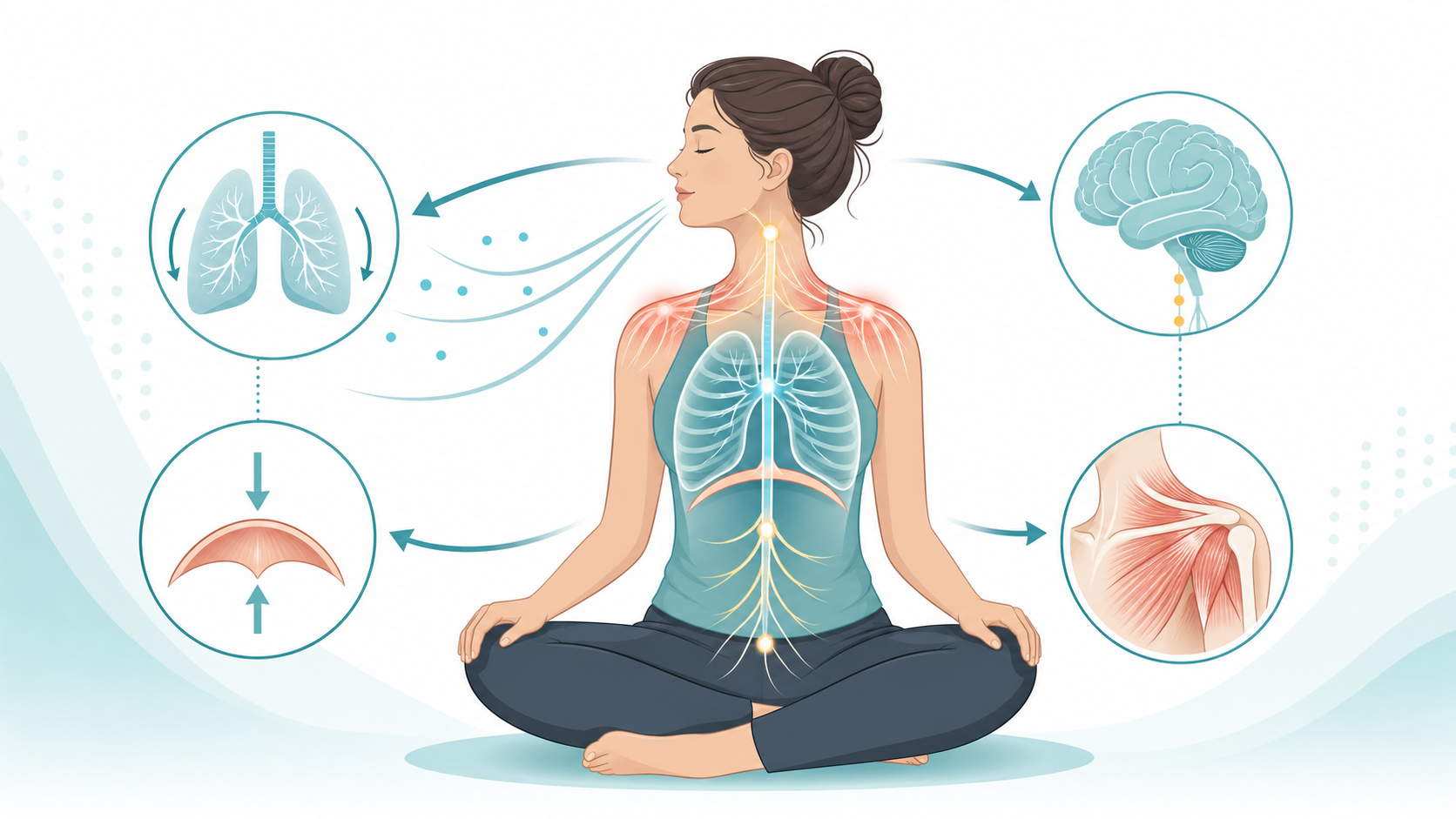
When you are under stress, your body may prepare for action. Breathing can become shallower, shoulders may rise, the jaw may clench, and muscles may stay more alert than they need to be. This response can be useful for short bursts, but it can become tiring when it repeats all day.
The body also learns patterns. If you spend stressful work hours leaning forward, holding your breath, and tightening your shoulders, those areas may start to feel tense even when the workday ends. The tension is real, but the solution is not always to chase the tight muscle with harder stretching.
This is especially common around the neck and upper back. If your traps always feel tight, there may be more to the story than one tight muscle. The full pattern can include shoulder blade strength, ribcage position, breathing, visual demand, workstation habits, and recovery.
Common places tension shows up
Stress related tension can show up almost anywhere, but certain areas tend to work harder during daily life. The jaw, neck, shoulders, chest, low back, hips, and forearms are common because they are tied to posture, breathing, gripping, screen use, and repeated tasks.
- Jaw tension may come with clenching, headaches, or neck tightness.
- Neck and shoulder tension may feel worse after screen time or busy workdays.
- Chest and rib tension may appear when breathing becomes shallow.
- Low back or hip tension may increase when stress affects sleep or sitting habits.
- Forearm tension may build when stress increases gripping, typing, or hand use.
If your tension is mostly around the shoulder and upper back, manual therapy may help reduce guarding, but it works best when paired with movement and strength habits that change why the tension keeps returning.
The stress and movement loop
Stress can change how you move. Less movement can then make the body feel more stiff and sensitive. That stiffness can create more concern, which can create more guarding. This loop is common, and it is one reason gentle movement can be useful even when the problem feels emotional or mental at first.
The goal is not to pretend stress is simple. The goal is to give the body safe signals. Walking, easy strength work, breathing, and mobility can tell the nervous system that it does not need to stay on high alert all day.
If a person only stretches the tight area but never changes breathing, strength, breaks, sleep, or load, the tension often returns. The better plan is usually a combination.
Simple resets to try
A reset should be easy enough to use during a real day. It should not require a mat, a perfect setup, or a long break. The best reset is the one you will actually repeat.
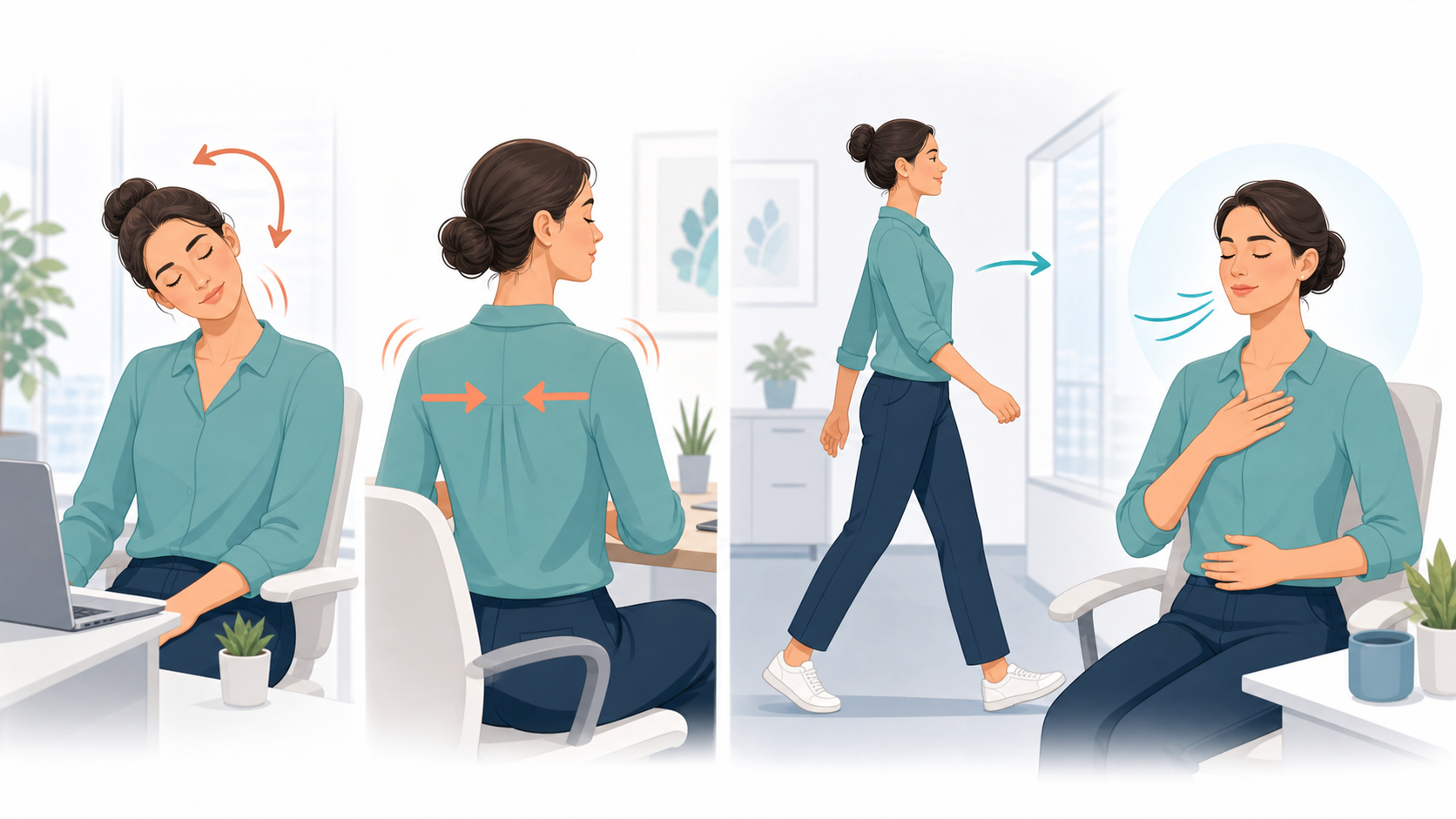
- Take 3 slow breaths with one hand on the ribs and one hand on the belly.
- Gently turn the head side to side without forcing the end range.
- Stand up and walk for 2 to 5 minutes after a long sitting block.
- Relax your jaw by letting the molars separate.
- Do 5 easy shoulder blade squeezes without shrugging.
- Lower the intensity of your next workout if stress and poor sleep are high.
If sitting makes the tension worse, you may also find our article on stiffness after sitting helpful. It explains why the first movements after stillness can feel tight even when nothing dramatic happened.
When care can help
Professional care can help when body tension keeps returning, affects sleep, causes headaches, limits exercise, or makes you feel unsure about movement. It can also help when symptoms seem to move around from the neck to shoulder, shoulder to back, or back to hip.
Get medical advice urgently if tension comes with chest pain, shortness of breath, fainting, sudden weakness, new numbness, severe headache, or symptoms that feel unusual or unsafe. Those situations should not be treated as simple muscle tension.
What Sophysio looks at
At Sophysio, we look at the body as a system. For stress related tension, that may include breathing mechanics, neck and shoulder motion, ribcage mobility, strength, posture habits, work demands, sleep, and how much recovery your body is getting.
The plan may include education, gentle mobility, strengthening, manual therapy, pacing, and realistic home strategies. It should feel useful, not overwhelming. If tension is becoming a pattern, you can book an appointment or reach out to Sophysio.
FAQs
Yes. Stress can change breathing, posture, muscle tone, sleep, and sensitivity. That can make the body feel tight even without a new injury.
Many people hold tension around the neck and shoulder girdle when focused, rushed, or anxious. It can become a habit if the body repeats it often.
Stretching may help for a short time, but recurring tension usually needs a broader plan that includes movement, strength, breathing, breaks, and recovery.
Get help if tension keeps returning, affects sleep, causes headaches, limits activity, or comes with symptoms that feel unusual or concerning.
Keep reading
- Why do I feel stiff after sitting too long?
- How shoulder mobility affects your tennis serve
- Why your traps always feel tight
Sources
- American Psychological Association, Stress effects on the body
- National Institute of Mental Health, So stressed out fact sheet
- MedlinePlus, Stress