
 Services
 Conditions We Treat
 Contact
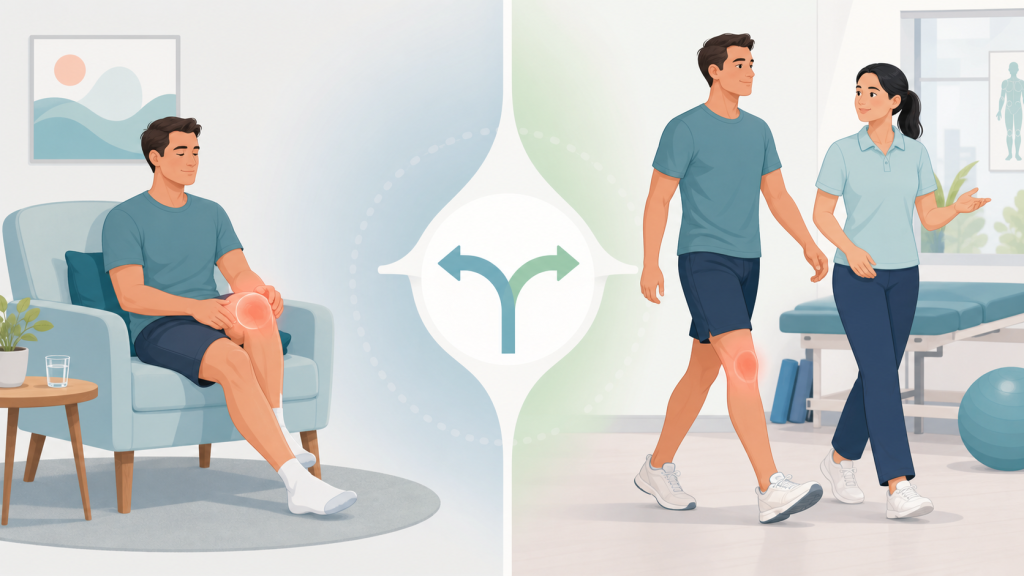
If you are wondering whether it is better to rest or keep moving when something hurts, the safest answer is usually this: rest briefly if the pain is sharp, new, or clearly irritated, then return to gentle movement as soon as your body allows. If pain keeps changing how you walk, lift, sleep, or work, physical therapy can help you understand what type of movement is useful and what should be modified.
Complete rest is not always the best choice. Gentle movement often helps stiffness, circulation, confidence, and recovery. The key is choosing movement that feels tolerable during the activity and does not create a strong symptom flare later.
In this article
Pain is a signal, not always a stop sign
Pain is information from your body. Sometimes it warns you to protect an area. Sometimes it appears because a joint, tendon, nerve, or muscle is sensitive after more load than usual. That is why the best response is not the same for every person or every injury.
A sore knee after a long walk, a stiff back after travel, and a shoulder that hurts after tennis may all need different choices. The goal is to avoid two extremes: ignoring pain and pushing hard, or stopping all movement for days and becoming more stiff.
This is where a movement based approach can help. Sports rehabilitation and general rehab both look at how the body handles load, timing, strength, mobility, and recovery. The question is not only where it hurts. The better question is what your body can handle today.
When rest makes sense
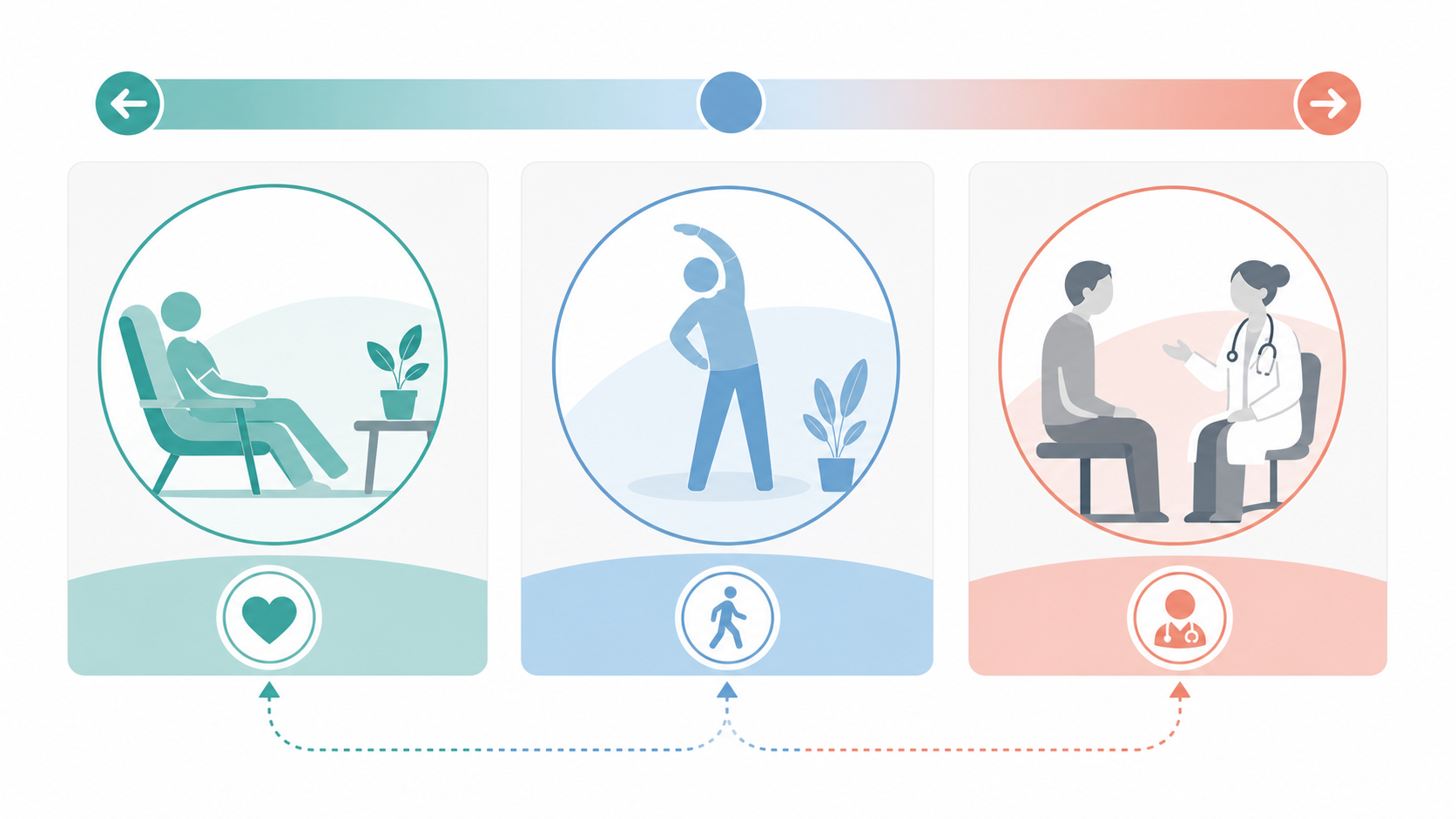
Rest can be useful when pain is intense, symptoms are new, or the area feels clearly irritated. This does not always mean bed rest. It may mean reducing the painful activity, changing the position, shortening the task, or giving the area a day or two away from the movement that caused the flare.
- Pain that is sharp or worsening with each step, lift, or repetition usually deserves a pause.
- Swelling, bruising, or a recent fall may need a more protective approach.
- If a movement changes your gait or makes you compensate heavily, modify it instead of forcing it.
- If you feel unwell, dizzy, feverish, or unsafe, stop and seek medical advice.
Think of rest as a tool, not a whole recovery plan. A short rest window can calm symptoms, but staying still for too long may make the body feel more guarded. Many people notice that the area becomes more stiff, more sensitive, or less confident after several days of avoiding movement completely.
When gentle movement helps
Gentle movement often helps when symptoms are mild to moderate, stiffness is the main issue, or pain improves after warming up. Movement can increase circulation, keep joints comfortable, and remind the nervous system that normal motion is safe.
The movement does not need to be impressive. It can be a short walk, easy range of motion, slow breathing, or a lighter version of the activity you want to return to. For some people, manual therapy can also help reduce guarding so movement feels easier to access.
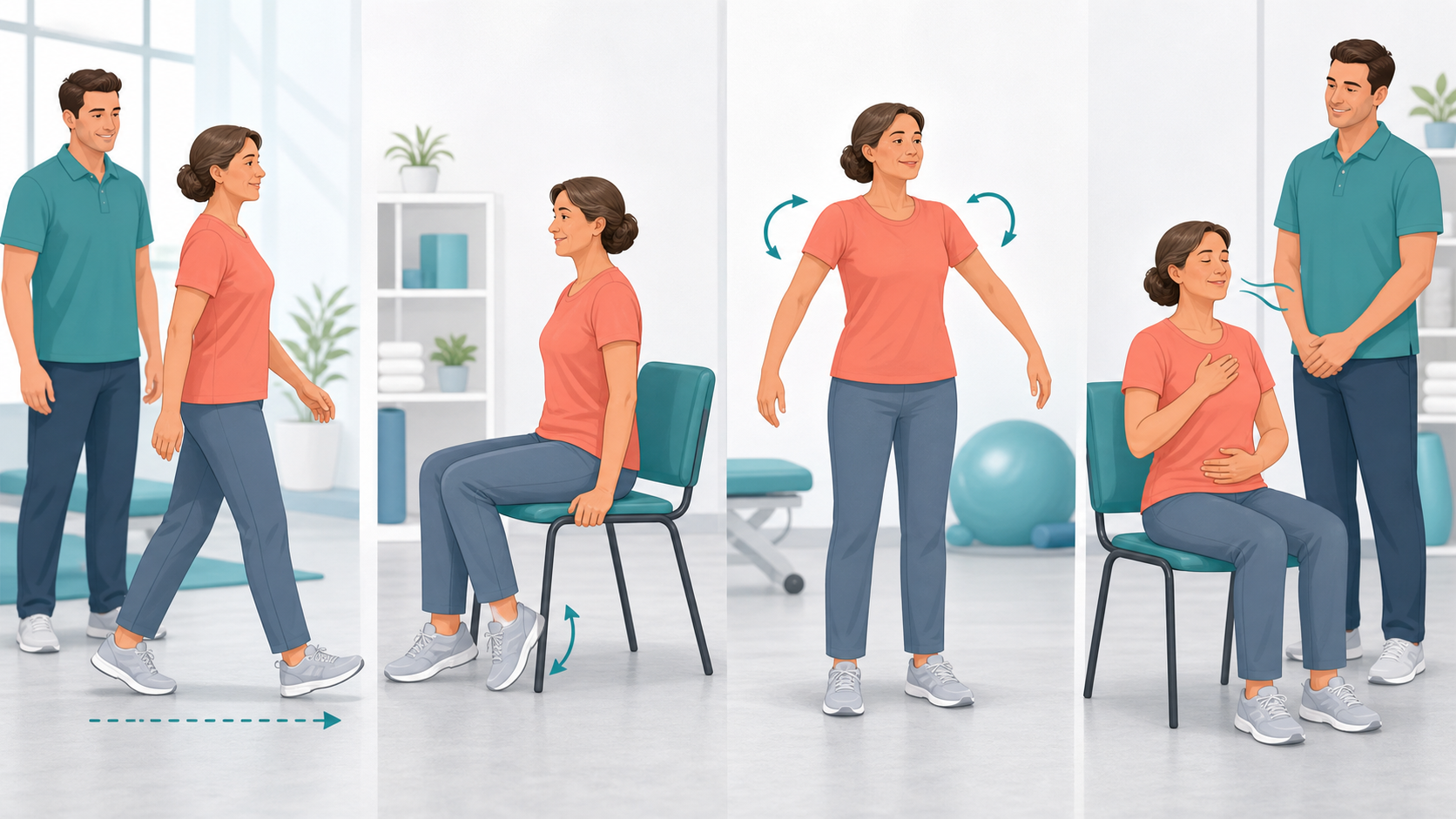
A useful rule is that movement should feel better, the same, or only mildly uncomfortable while you do it. It should also settle afterward. If it keeps building, changes your mechanics, or produces a strong flare later, the dose may be too high.
Use the 24 hour response
One of the most practical ways to decide whether you did the right amount is to watch your 24 hour response. Your body often gives better feedback after the activity than during it.
- If symptoms feel the same or better the next day, the amount was probably reasonable.
- If symptoms are mildly higher but settle quickly, you may need a smaller dose next time.
- If pain is clearly worse the next day or you lose function, reduce the load and get guidance.
- If symptoms repeat every time you return to activity, the plan needs adjusting.
Do not judge progress only by one moment of pain. Look at patterns: how often it hurts, how quickly it settles, how much you can do, and whether your confidence is improving.
What to try first
For a mild flare, start with low-risk movement. Keep it short and easy. The goal is to find a level your body accepts, not to test your toughness.
- Try 5 to 10 minutes of easy walking if walking feels natural.
- Use slow joint motion in a comfortable range, such as ankle circles, hip rocks, shoulder circles, or gentle spinal motion.
- Break up sitting with a short stand and walk every 30 to 60 minutes.
- Reduce the range, weight, speed, or time of the activity that caused symptoms.
- Stop before symptoms climb too much. A smaller amount done consistently is often better than one big push.
If you play tennis, golf, pickleball, or train regularly, it can be tempting to keep playing because the pain warms up. That can be okay sometimes, but repeated warm-up pain is a clue to look closer at strength, mobility, and load. Our article on shoulder mobility and tennis serve explains how one area may feel painful because several body regions are not sharing the work well.
When to get help
Get checked if pain is severe, follows a fall or accident, includes swelling or bruising, causes numbness or weakness, affects balance, or keeps returning when you try to resume normal activity. You should also get help if you are avoiding more and more movement because you are unsure what is safe.
At Sophysio, the goal is to help you understand what your body can do now, what needs to calm down, and how to rebuild safely. A good plan should give you more clarity, not more fear. If pain is limiting your day, you can book an appointment or contact Sophysio with questions.
FAQs
Not always. If the pain is mild and does not worsen during or after activity, gentle movement may be helpful. If pain is sharp, worsening, or changing how you move, reduce the activity and get guidance.
Pain is not always a sign of damage, but it should be respected. Mild discomfort that settles can be acceptable in some rehab situations. Strong, spreading, or escalating pain is different.
Many mild flares only need short relative rest, meaning you reduce or modify the irritating activity. If you need more than a few days of complete rest to function, it is worth getting assessed.
The safest choice is usually the easiest tolerable movement, such as a short walk, gentle range of motion, relaxed breathing, or a lighter version of the task that hurt.
Keep reading
- Why do I feel stiff after sitting too long?
- Why heel pain is often worse in the morning
- How shoulder mobility affects your tennis serve