
 Services
 Conditions We Treat
 Contact
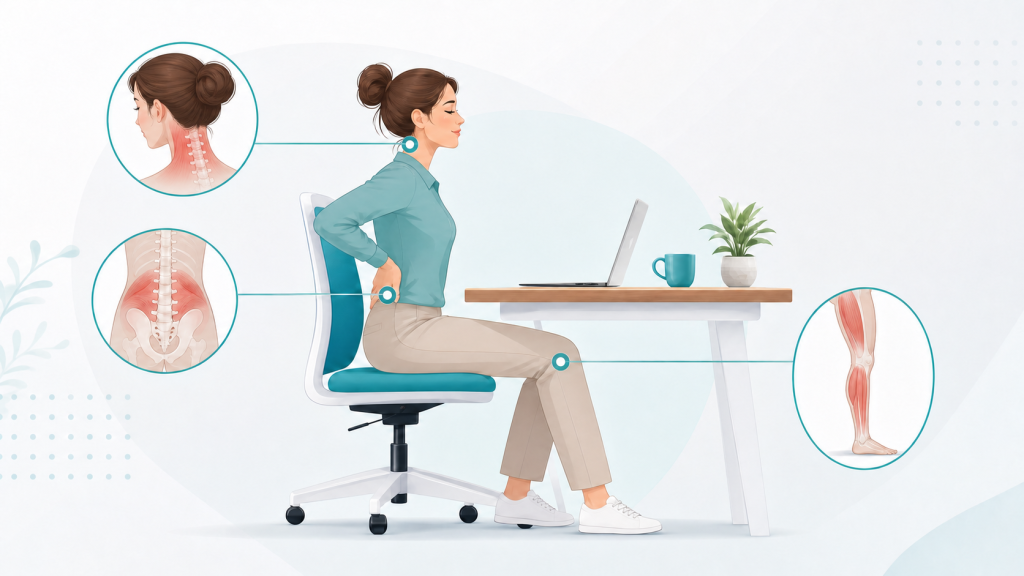
If you stand up after a long meeting, a drive, or a few hours at your desk and feel like your body needs a moment to “warm up,” you are not alone. Stiffness after sitting too long is common, and it does not always mean something is seriously wrong. Often, it is your body responding to a lack of movement.
The important question is not only why you feel stiff. It is also where you feel it, how quickly it improves, and whether it keeps coming back. That is where a physical therapy perspective can be useful. Stiffness is not always just a stretching problem. Sometimes it is a mobility issue, sometimes it is a strength issue, and sometimes it is your body asking for better movement habits during the day.
Why sitting makes your body feel stiff
Your body is designed to move. When you sit for a long time, your joints stay in a limited range, your muscles do less work, and circulation through the legs can slow down. That combination can make the first few steps after sitting feel tight, heavy, or awkward.
One of the biggest reasons is that sitting places your hips in a bent position. Your hip flexors stay shortened, your glutes are not doing much, and your lower back may hold one position for too long. If you are also leaning toward a screen, your upper back, neck, and shoulders may become tense from holding the same posture.
This is why stiffness often improves once you walk for a few minutes. Movement increases blood flow, gives your joints a change in position, and wakes up muscles that were quiet while you were sitting.
Where you feel stiff can tell you something
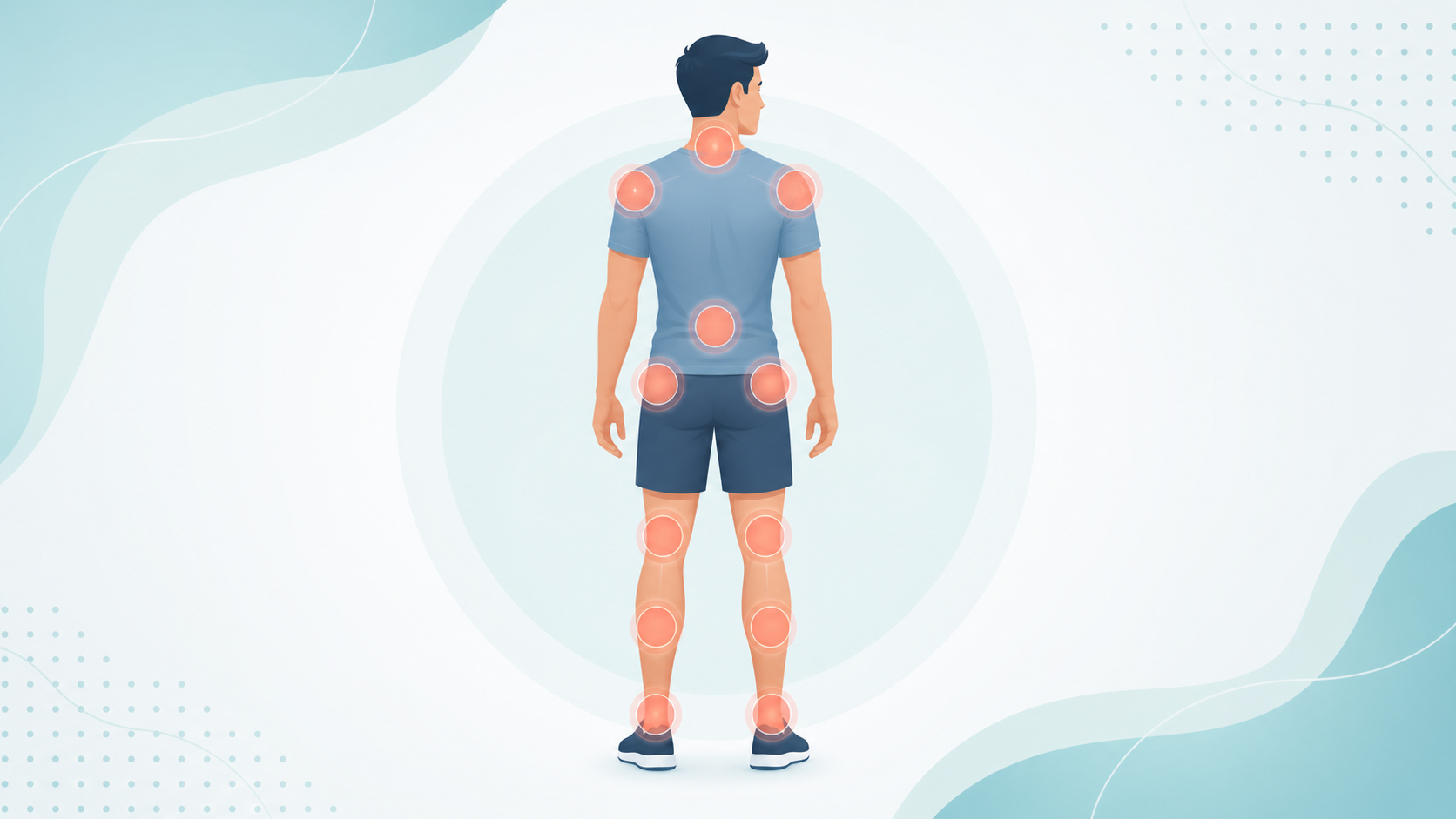
Stiffness after sitting can show up in different places. A stiff lower back may be related to prolonged spinal loading, hip position, or limited trunk movement. Hip stiffness may come from the front of the hip staying shortened for too long. Neck and shoulder stiffness often relates to screen posture, stress, and lack of upper-back movement.
Knee, calf, or ankle stiffness can also happen because the legs have been still. If your feet are tucked under the chair, crossed, or barely moving for hours, the joints and muscles below the knee may feel tight when you stand.
The key is pattern recognition. If stiffness is mild and goes away quickly, it may simply be a normal response to being still. If it keeps returning, limits walking, or turns into pain, it may be worth looking more closely at how your hips, spine, and legs are moving together.
Is stiffness the same as pain?
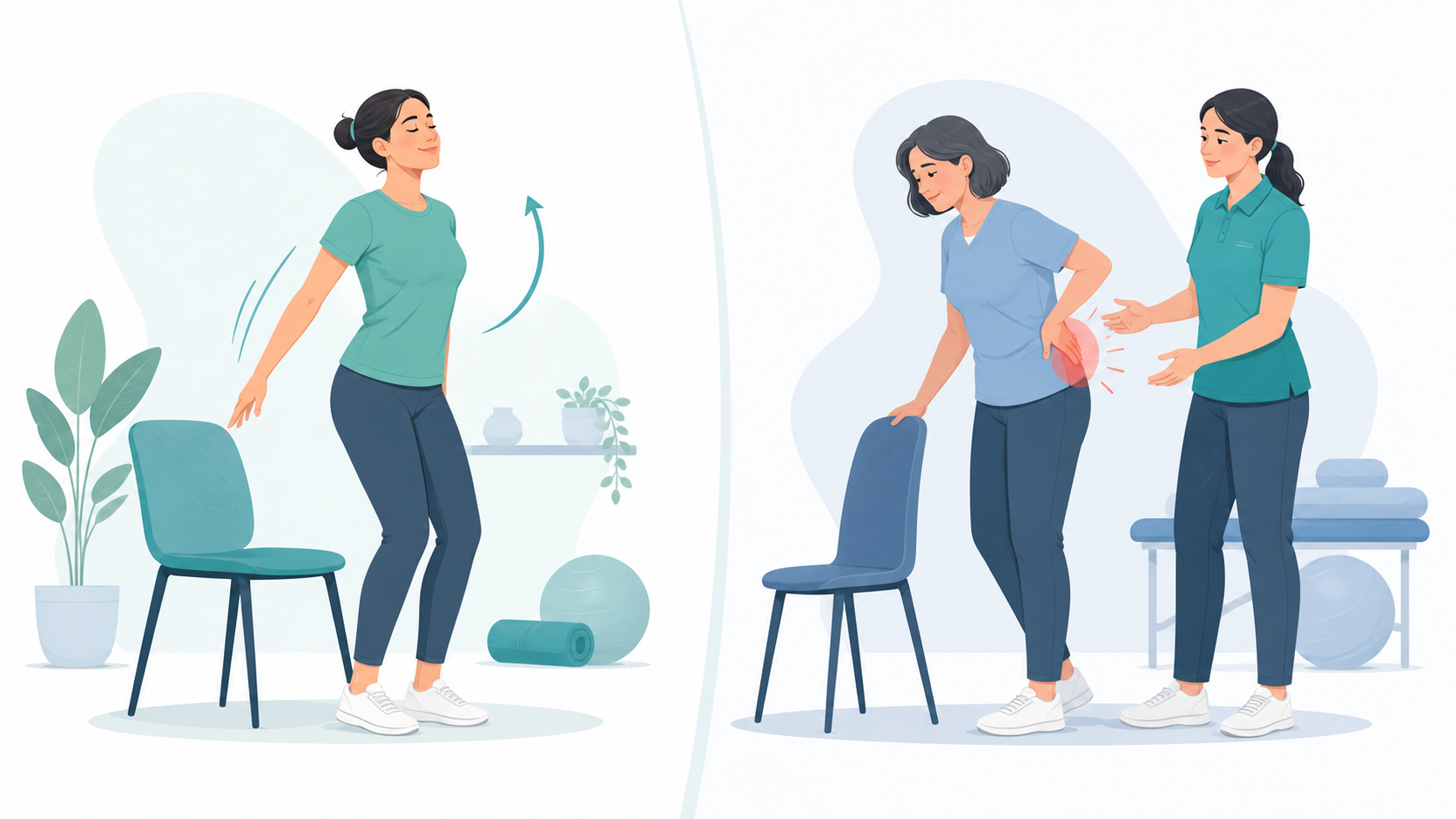
Stiffness and pain are related, but they are not the same. Stiffness often feels like tightness, heaviness, or resistance when you first move. Pain may feel sharper, more specific, or more limiting. A little stiffness that eases after movement is usually less concerning than stiffness that gets worse, radiates, causes numbness or tingling, or changes the way you walk.
For example, someone with mild hip stiffness after sitting may feel better after walking around the room. Someone with recurring stiffness and lower back pain may need a more complete look at hip mobility, core control, posture habits, and daily load. That is where physical therapy can help identify what is actually driving the pattern.
A simple 3-minute reset after sitting
You do not need a complicated routine every time you stand up. A short movement reset can often help your body transition out of sitting.
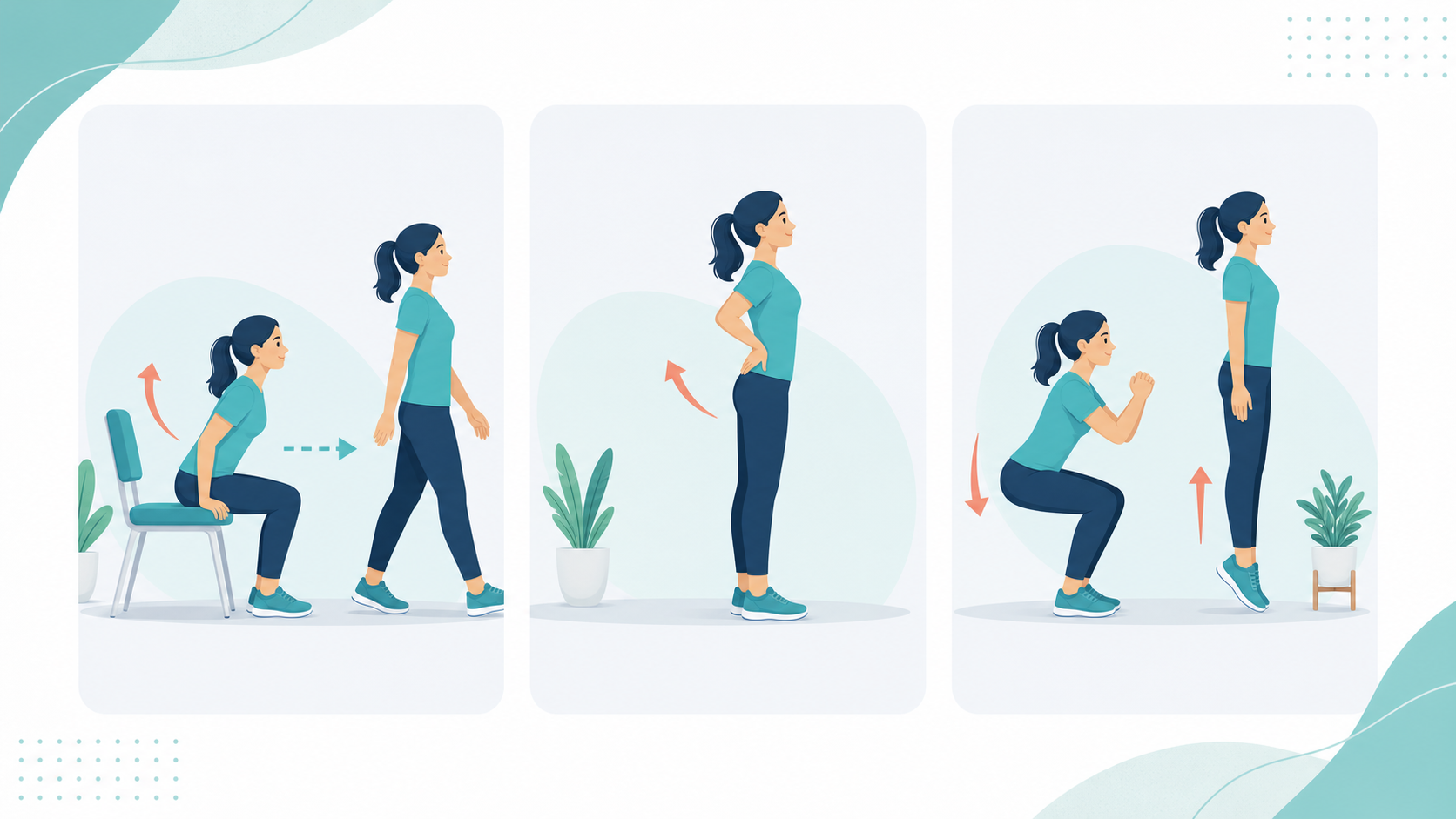
- Walk for 30 to 60 seconds. This helps circulation and gives your hips, knees, and ankles a quick change in position.
- Do gentle standing back or hip movements. Keep it comfortable. The goal is to move, not force a stretch.
- Add calf raises or mini squats. Light lower-body movement helps wake up the legs and glutes.
- Open the upper back. Try a few shoulder blade squeezes or gentle trunk rotations if your neck or shoulders feel stiff.
The best movement break is the one you will actually do. Some people need a timer every 30 to 45 minutes. Others do better using natural cues, like standing after a phone call, between meetings, or before starting a new task.
Why stretching alone may not fix it
Many articles about sitting stiffness focus only on stretches. Stretching can help, but it is not always the whole answer. If your stiffness keeps coming back, your body may need better strength, control, or tolerance for daily activity.
For example, tight hips may improve temporarily with stretching, but if your glutes and core are not contributing well, the same stiffness may return the next day. A stiff lower back may need hip mobility, but it may also need better trunk strength or movement variety. Neck stiffness may need posture changes, but also upper-back mobility and shoulder support.
This is why a good plan often combines mobility, strengthening, and habit changes. Manual therapy may help some people move more comfortably, while exercise helps the improvement carry over into daily life. If stiffness is connected to recurring lower back pain or hip pain, it is worth addressing the larger movement pattern instead of chasing one tight muscle.
When stiffness after sitting should be checked
Consider getting help if stiffness is becoming more frequent, lasts longer than a few minutes, limits your walking or standing, or keeps returning despite stretching and movement breaks. You should also pay attention if stiffness is paired with pain down the leg, numbness, tingling, weakness, swelling, or symptoms after an injury.
A physical therapist can look at how your spine, hips, knees, ankles, strength, and daily habits work together. The goal is not just to loosen you up for a few minutes. The goal is to help your body move better throughout the day.
If stiffness after sitting is starting to interfere with work, exercise, or everyday comfort, you can book an appointment with Sophysio or contact our team with questions.
FAQs
Movement increases circulation, changes joint position, and helps quiet muscles become active again. That is why stiffness often improves after a few minutes of walking.
It can be related to joint irritation or arthritis in some people, but stiffness after sitting is also common from inactivity, posture, muscle tension, and reduced movement variety. The pattern and duration matter.
A useful starting point is every 30 to 45 minutes. Even one to three minutes of walking or gentle movement can help your body avoid staying in one position too long.
Yes. Physical therapy can help identify whether stiffness is mostly related to mobility, strength, posture habits, or how your body handles daily activity.
Sources
- Verywell Health: What Happens to the Body After Sitting Down for Too Long?
- EatingWell: Stretches to Help Counteract the Effects of Sitting
- Real Simple: Ways to Sit Less and Move More During the Day