
 Services
 Conditions We Treat
 Contact
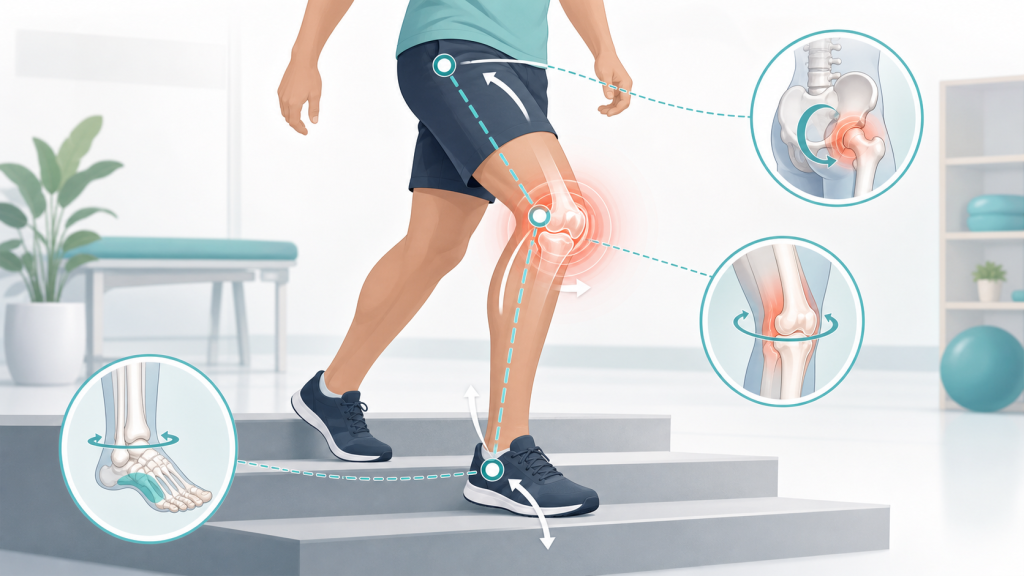
Knee pain is not always a knee problem. The knee is often where you feel symptoms, but the stress may come from the foot, ankle, hip, or how the whole leg handles load. That is why orthopedic physical therapy often looks above and below the knee instead of treating only the painful spot.
The knee sits between the foot and the hip. If the foot collapses, the ankle is stiff, or the hip does not control rotation well, the knee may be asked to absorb more stress during walking, stairs, squats, tennis, or exercise.
In this article
- Why the knee reacts to the foot and hip
- Common patterns that irritate the knee
- What can help
- When knee pain needs assessment
Why the knee reacts to the foot and hip
The knee mostly bends and straightens, but it also has to tolerate rotation and side-to-side forces. Those forces are influenced by what happens at the foot and hip. A small change in how the foot hits the ground can change how the shin rotates. A small change in hip control can change how the thigh lines up over the knee.
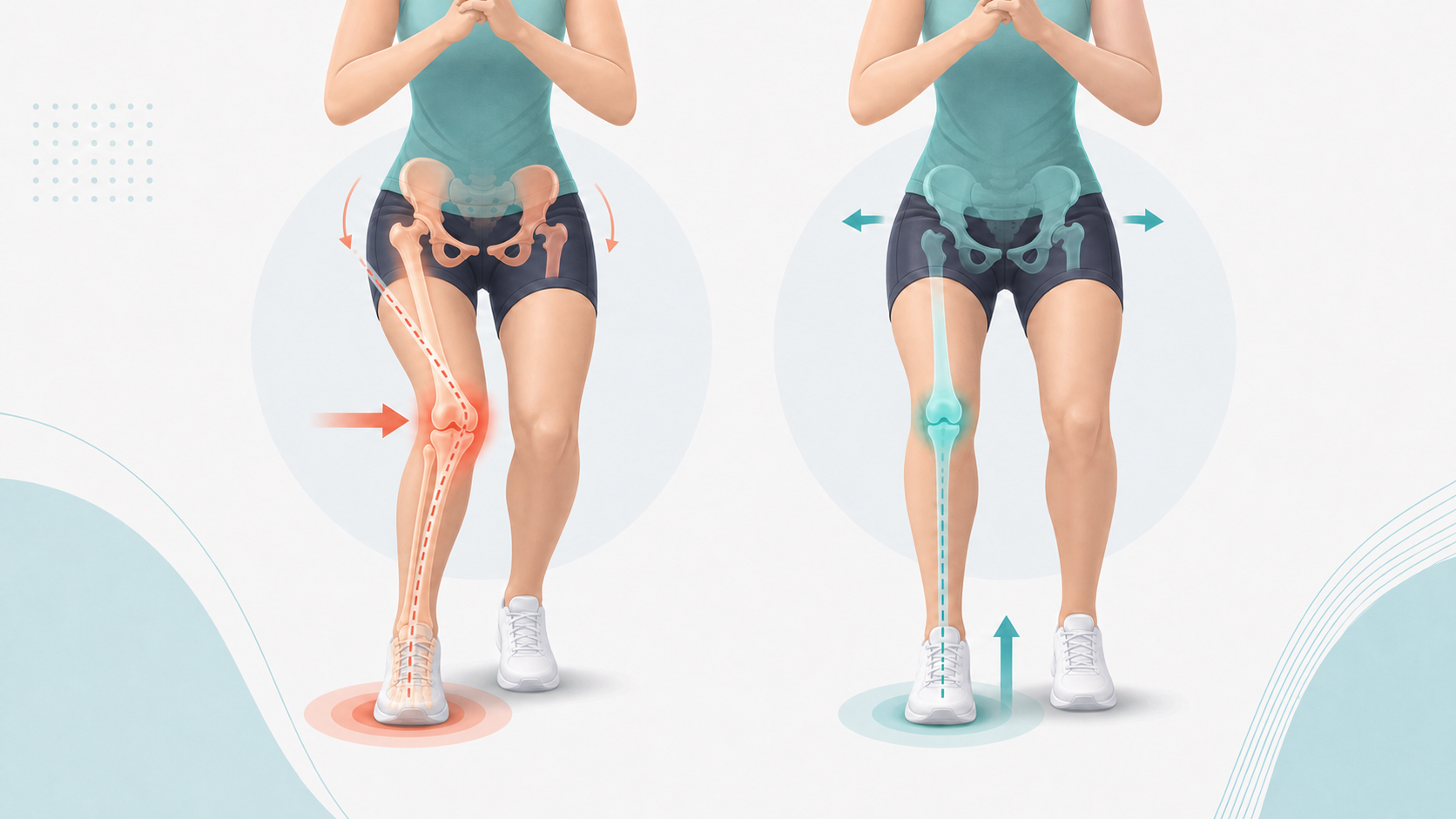
This is why two people can have knee pain for different reasons. One person may need more ankle mobility. Another may need hip strengthening. Another may need better foot control, shoe support, or a gradual return to activity.
Common patterns that irritate the knee
A common pattern is the knee drifting inward during stairs, squats, or landing. This can happen when the hip does not control the thigh well, when the foot collapses inward, or when the ankle is too stiff to let the leg move smoothly.
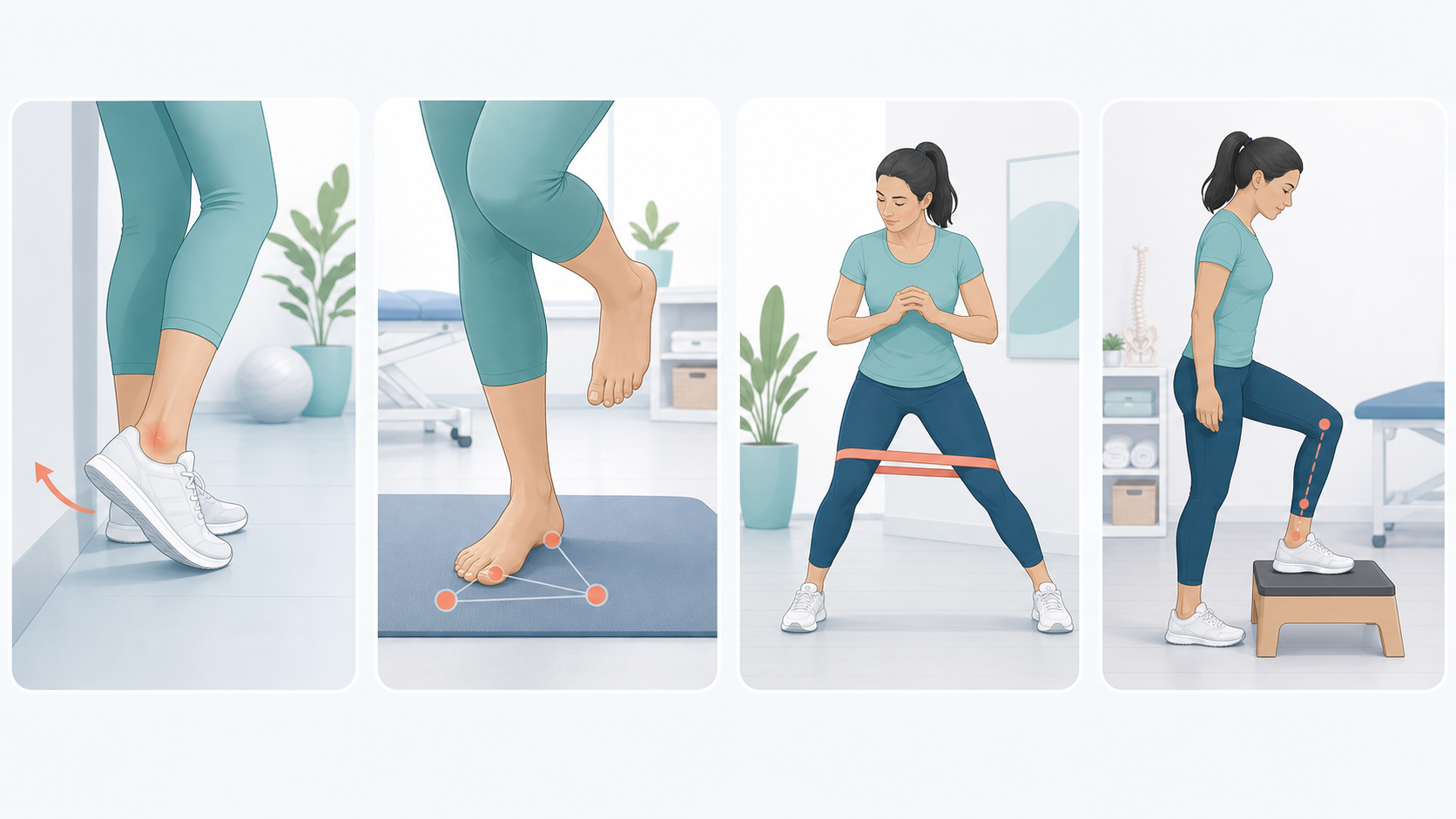
- Foot mechanics. Changes in arch control or foot position can affect knee tracking.
- Ankle stiffness. Limited ankle motion may make the knee compensate during bending or stairs.
- Hip weakness. Poor hip control can increase stress at the knee.
- Load changes. A sudden increase in walking, tennis, gym work, or stairs can irritate the knee.
- Old habits. Movement patterns can linger after a previous ankle, hip, or back issue.
This is especially relevant for active people with knee injuries, hip pain, or foot problems such as plantar fasciitis. The painful area matters, but the movement pattern matters too.
What can help
The right plan depends on the pattern. Some people need foot and ankle work. Others need hip strength. Many need a mix of mobility, balance, and gradual strengthening. The goal is to help the leg absorb load more evenly.
- Start with gentle activity changes instead of total rest unless pain is severe.
- Improve ankle and calf mobility if the knee feels limited during stairs or squats.
- Strengthen the hips and glutes so the thigh tracks with better control.
- Practice slow step-downs or sit-to-stands with clean alignment.
- Build back gradually instead of testing the knee with too much too soon.
When knee pain needs assessment
Get checked if knee pain is sharp, swelling, giving way, locking, worsening, or limiting normal walking and stairs. You should also get help if pain keeps returning every time you resume activity.
FAQs
Yes. Hip weakness or poor hip control can change how the thigh moves, which can increase stress at the knee.
Yes. Foot and ankle mechanics can influence shin rotation and knee tracking during walking, stairs, and sport.
Not always. Many people need modified activity and progressive strengthening, but sharp or worsening pain should be assessed.
Yes. Physical therapy can assess the full chain and build a plan that addresses the source of stress, not only the sore spot.
Keep reading
If knee pain keeps returning, book an appointment with Sophysio or contact our team to ask about a foot, hip, and knee movement assessment.
Sources
- AAOS OrthoInfo: Patellofemoral pain syndrome
- NCBI Bookshelf: Patellofemoral syndrome
- AAOS OrthoInfo: Knee pain and problems