
 Services
 Conditions We Treat
 Contact
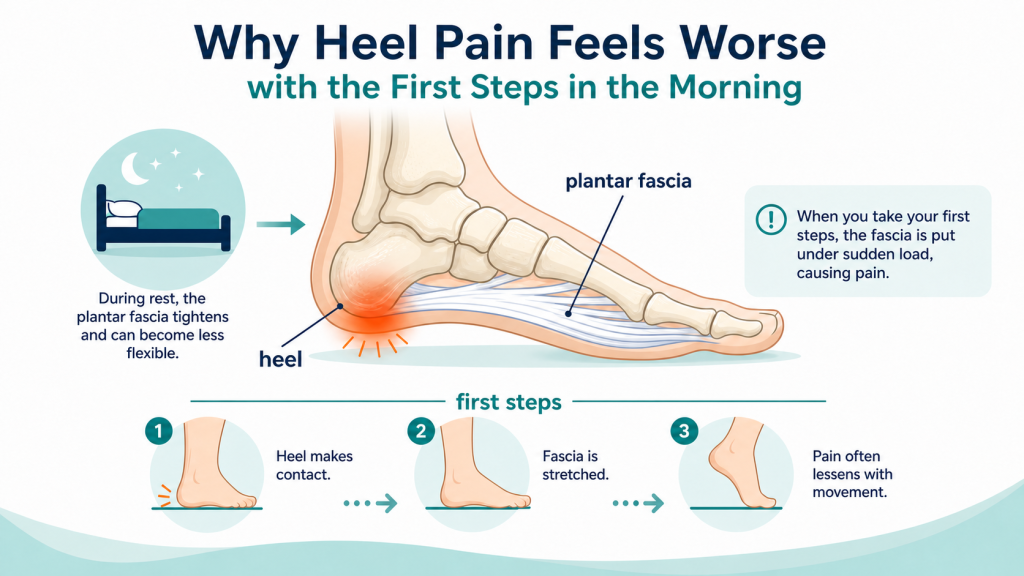
Why heel pain is worse in the morning usually comes down to a simple pattern: the bottom of the foot rests overnight, then gets loaded suddenly when you stand. If the plantar fascia, calf, or heel tissues are irritated, that first stretch and pressure can feel sharp. This is common with plantar fasciitis, but it can also happen with other foot and ankle issues.
If your first few steps out of bed feel like stepping on a bruise, a stone, or a tight band under the heel, the pattern matters. It gives clues about tissue stiffness, load tolerance, footwear, walking habits, and whether orthopedic physical therapy may help you move more comfortably.
At a glance
- Morning heel pain is often linked to stiffness after rest.
- The first steps suddenly stretch and load the plantar fascia.
- Pain may ease after walking because the tissue warms up.
- If it keeps returning, the foot may need a better load, strength, mobility, or footwear plan.
This article is for general education and is not a diagnosis. If your pain is severe, started after a fall or sudden pop, includes swelling or bruising, causes numbness or tingling, or makes it hard to put weight on the foot, seek medical care promptly.
Table of contents
- Why the first steps hurt
- What the plantar fascia does
- Why pain may ease after a few minutes
- What can help before you stand
- How physical therapy can help
- FAQs
Why the first steps hurt
During sleep, your ankle and toes often relax in a slightly pointed position. That can leave the calf and the plantar fascia less ready for a full stretch. When you stand, your heel hits the floor, your arch accepts your body weight, and the tissue under the foot has to lengthen quickly.
The American Academy of Orthopaedic Surgeons describes pain with the first few steps after getting out of bed, or after a long period of rest, as a common plantar fasciitis symptom. The same source notes that this pain may ease after a few minutes of walking. That pattern is one reason people often say, “It hurts when I first get up, then it loosens.”
The problem is not always the first step itself. The first step is often just when the irritated tissue announces itself. If the foot has been overloaded by more walking, running, standing, unsupportive shoes, or a sudden change in activity, the morning can reveal that sensitivity.
What the plantar fascia does
The plantar fascia is a strong band of tissue along the bottom of the foot. It runs from the heel toward the toes and helps support the arch. It also helps the foot manage load when you walk, climb stairs, stand, or push off your toes.
When the plantar fascia is irritated, pain is often felt near the bottom or inside edge of the heel. Cleveland Clinic explains that plantar fasciitis commonly causes heel pain that is worse with the first steps after rest. Mayo Clinic also describes stabbing pain near the heel that is often worse after waking.
Still, not every case of heel pain is plantar fasciitis. Heel pad irritation, nerve irritation, tendon problems, stress injury, footwear changes, or training errors can feel similar. This is why a good exam looks at the heel, but also checks ankle motion, calf flexibility, foot strength, gait, balance, and activity history.
Why pain may ease after a few minutes
Many people feel better after walking around for a bit. Movement increases circulation, warms the tissue, and lets the foot gradually adapt to loading. The plantar fascia and calf may feel less guarded once they have been moving.
That improvement can be misleading. If pain eases during the morning but returns after standing, walking, exercise, or the next day, the foot may still be irritated. In that case, the goal is not just to “stretch it out.” The goal is to help the foot tolerate normal life again.
For active people, this may include a return-to-activity plan similar to what we use in sports rehabilitation. For someone who stands at work all day, it may mean changing how load is spread across the foot, calf, hip, and shoes.
What can help before you stand
A few simple habits can make the transition from rest to standing less harsh. These should feel gentle. Do not force a painful stretch.
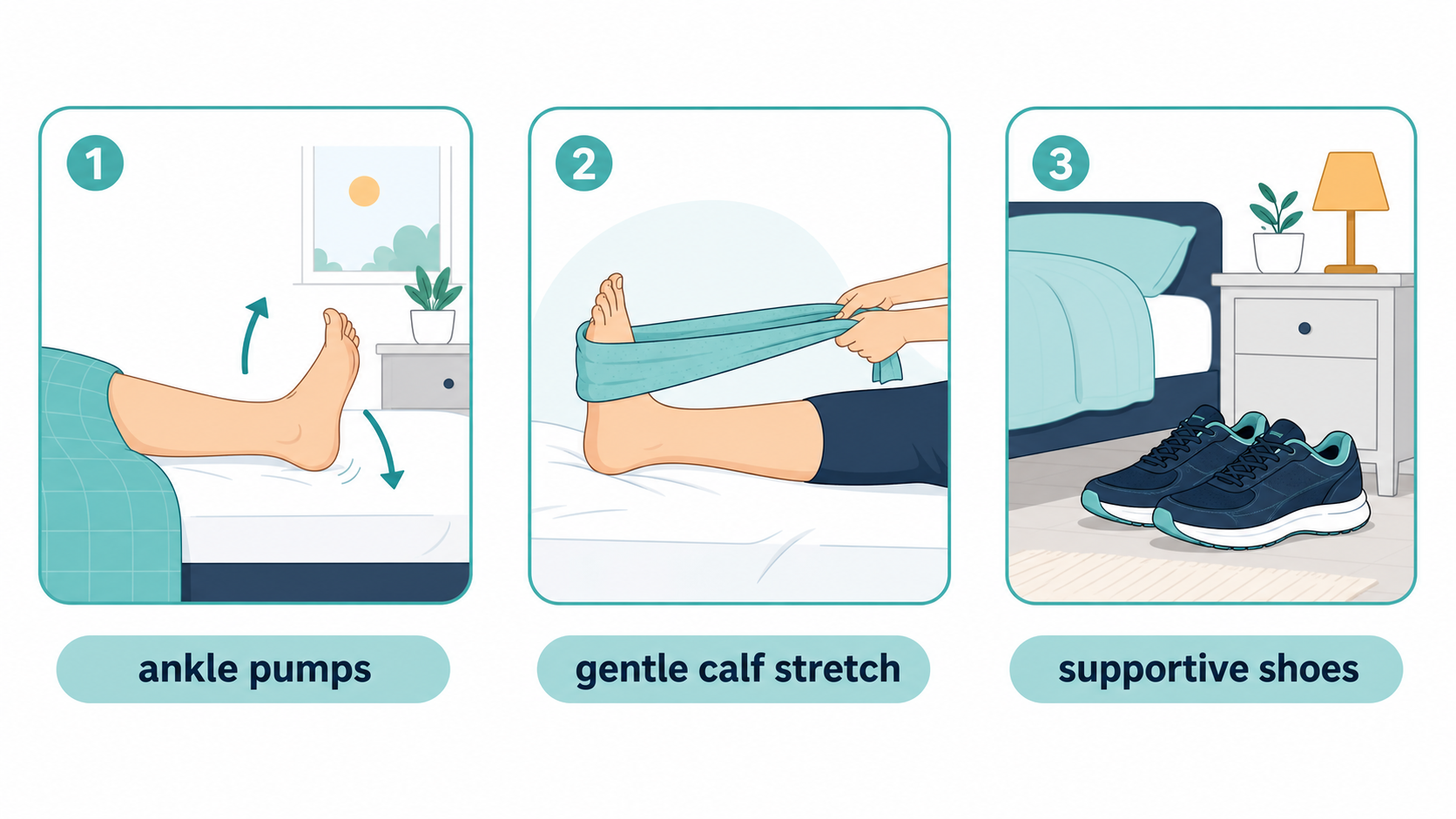
- Move the ankle first. Point and flex the foot 10 to 15 times before standing.
- Warm up the arch. Lightly massage the bottom of the foot with your hand.
- Stretch the calf gently. A comfortable calf stretch may reduce pull through the heel.
- Use supportive shoes early. Avoid first steps barefoot on hard floors if that triggers pain.
- Watch sudden activity spikes. More walking, hills, running, or standing can overload sensitive tissue.
If the pain is specifically at the heel and arch, our plantar fasciitis page explains how therapy may address foot mobility, calf tightness, strength, and walking tolerance. If your symptoms are part of a broader foot, ankle, knee, or hip pattern, physical therapy may look at the full chain instead of treating the heel in isolation.
How physical therapy can help
A physical therapy evaluation for morning heel pain usually starts with your story. When did it begin? Is it worse after rest, after exercise, or after long standing? Did you change shoes, activity, work demands, or walking volume? These details matter because heel pain often reflects a load problem, not just a sore spot.
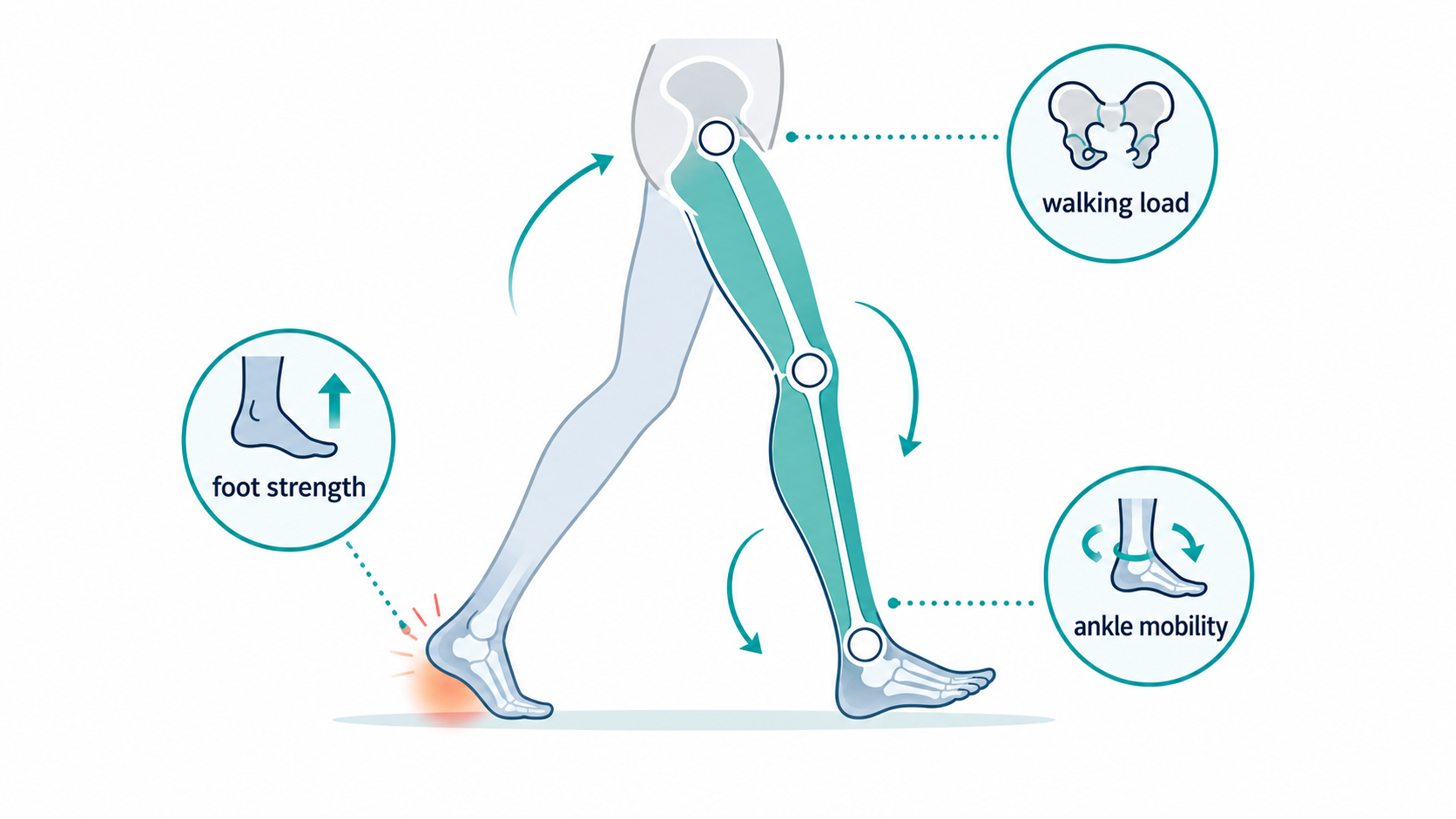
Your therapist may check ankle mobility, calf length, foot strength, arch control, balance, gait, footwear, and tenderness around the heel. Treatment may include calf and foot strengthening, mobility work, manual therapy, balance training, walking progression, and practical home exercises. If the issue is connected to joint or soft tissue mechanics, manual therapy may also be part of the plan.
The most useful plan is specific. A runner with heel pain needs a different plan than someone who stands on hard floors for work. A person with a stiff ankle needs a different focus than someone whose foot muscles fatigue quickly. That is why the evaluation matters.
When to get help
Consider getting help if morning heel pain lasts more than a couple of weeks, keeps returning, changes how you walk, limits exercise, or makes you avoid normal activities. You should seek medical care sooner if pain is severe, follows a fall or sudden pop, includes swelling or bruising, causes numbness or tingling, or prevents weightbearing.
If heel pain is changing how you start your day, Sophysio can help you understand what is going on and what to do next. You can book an appointment or contact our team with questions.
FAQs
No. Plantar fasciitis is common, but heel pain can also come from heel pad irritation, nerve irritation, tendon problems, stress injury, or other causes. A physical therapy or medical evaluation can help sort out what is most likely.
Sitting is another rest period. When you stand again, the foot tissues have to reload. That is why pain after sitting can feel similar to pain with the first steps in the morning.
Gentle ankle movement or light stretching may help some people, especially if the stretch is comfortable. Avoid aggressive stretching that increases sharp pain.
Physical therapy may help by identifying load, mobility, strength, footwear, and movement factors that keep the heel irritated. Long-lasting pain should be assessed so the plan fits the cause.
Sources
- American Academy of Orthopaedic Surgeons, Plantar fasciitis and bone spurs
- Cleveland Clinic, Plantar fasciitis
- Mayo Clinic, Plantar fasciitis symptoms and causes