
 Services
 Conditions We Treat
 Contact
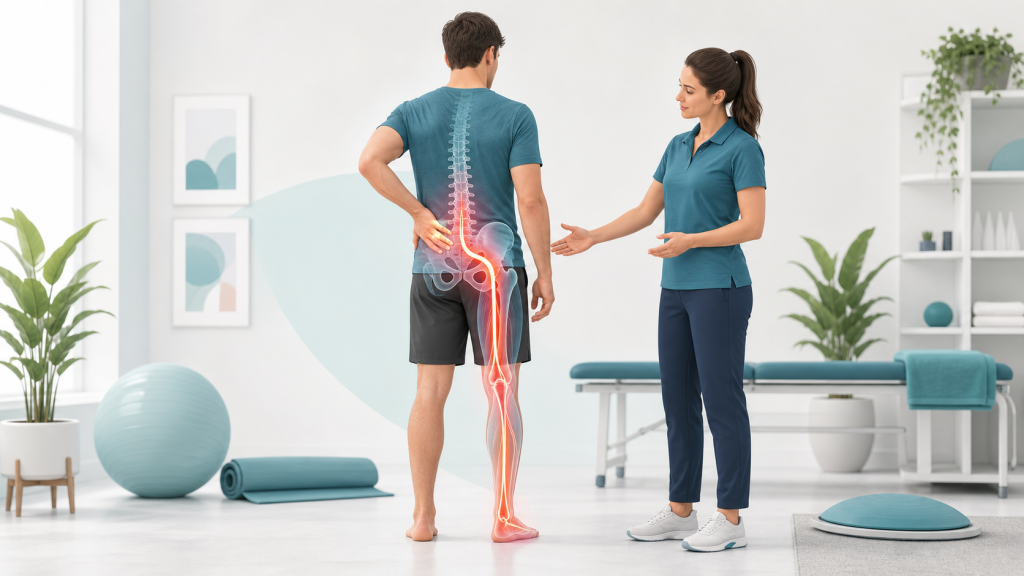
Sciatic pain can be frustrating because it may travel from the lower back or buttock into the leg. Helpful tips for sciatic pain usually start with gentle movement, not aggressive stretching or complete rest. If symptoms keep returning, physical therapy can help identify what is irritating the nerve and what your body can tolerate safely.
Sciatic-type symptoms can feel like pain, burning, tingling, numbness, cramping, or a line of discomfort down the leg. The goal is to calm sensitivity while keeping the body moving in a way that does not flare symptoms.
In this article
- What sciatic-type pain can feel like
- Why gentle movement often helps
- How to think about nerve flossing
- When to get help quickly
What sciatic-type pain can feel like
Sciatic-type pain often follows a path from the lower back or buttock into the back or side of the leg. Some people feel it only in the buttock. Others feel it into the calf or foot. The exact pattern can vary depending on what tissue is irritated and how sensitive the nerve is.
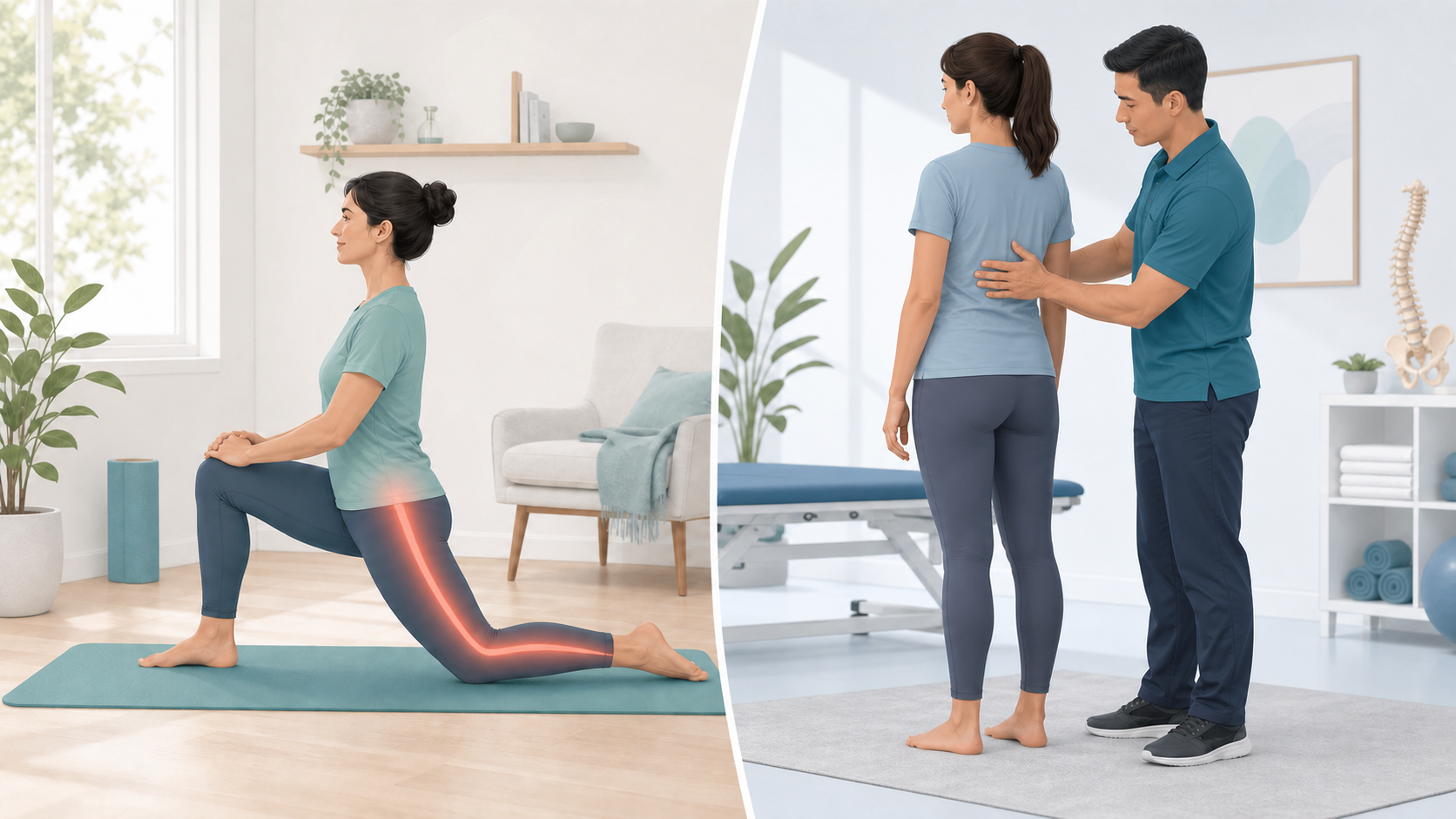
The mistake many people make is stretching harder because the leg feels tight. If the nerve is irritated, aggressive hamstring or glute stretching can sometimes make symptoms worse. A calmer approach usually works better.
Why gentle movement often helps
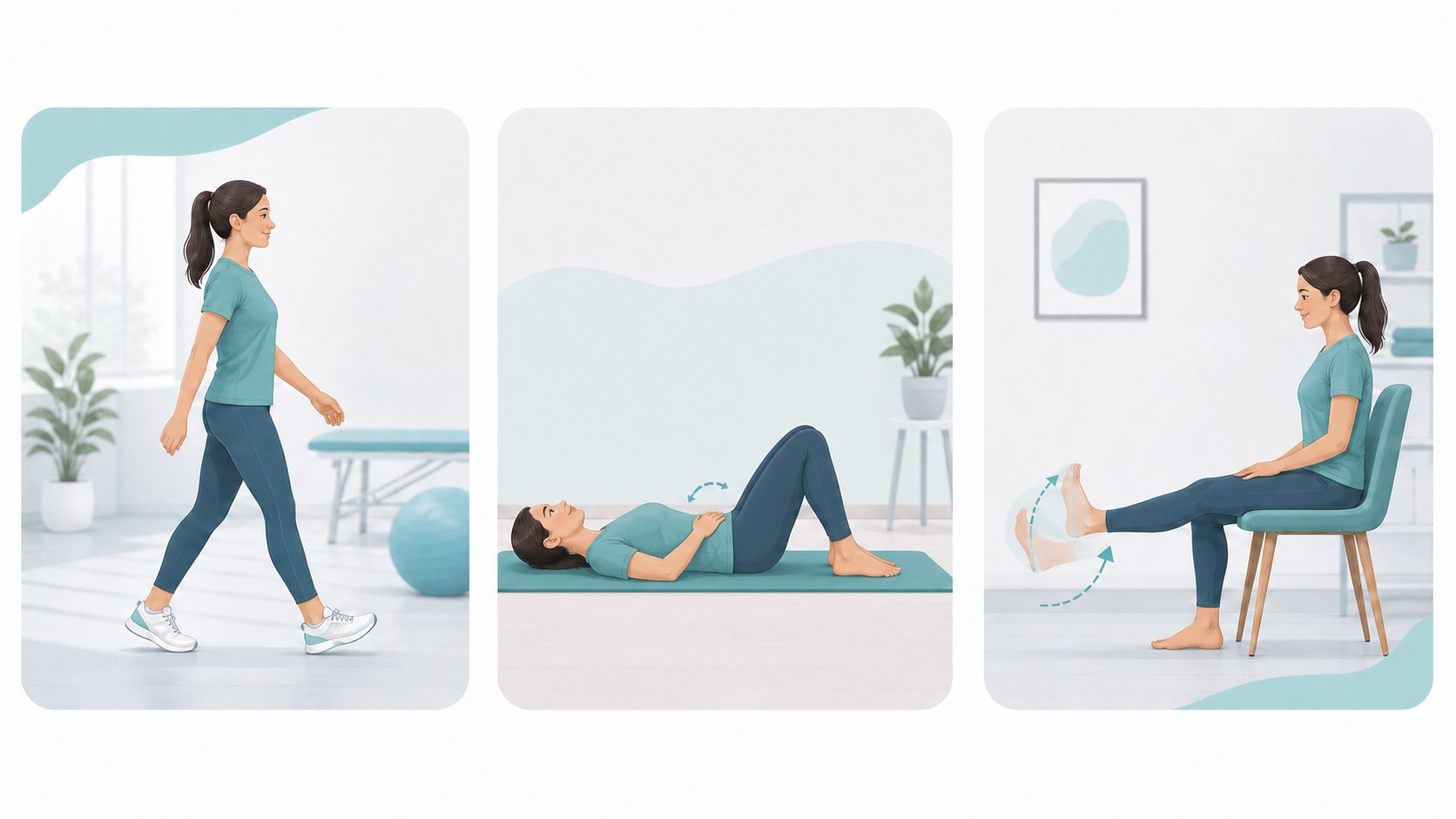
Gentle movement can help reduce guarding, improve circulation, and give the nervous system a signal that motion is safe. For many people, short walks and frequent position changes feel better than staying in one position for hours.
- Walk for short, comfortable periods if it does not increase symptoms.
- Change positions often instead of sitting or lying in one posture too long.
- Use gentle pelvic tilts or hip shifts to explore motion without forcing it.
- Avoid pushing into sharp, spreading, or increasing leg symptoms.
- Track what calms symptoms and what makes them travel farther down the leg.
How to think about nerve flossing
Nerve flossing is not the same as stretching a muscle. It is a gentle way to move the nerve through a range without yanking on it. For some people it helps, but it should feel mild and controlled. If symptoms increase, travel farther, or linger afterward, back off.
If sciatic symptoms are connected with sciatica, lower back pain, or a herniated disc, the plan should match the pattern. Some people need mobility. Others need strengthening, walking tolerance, or changes to sitting and lifting habits.
When to get help quickly
Get urgent medical help if you have new loss of bladder or bowel control, numbness in the saddle area, major leg weakness, fever with back pain, or symptoms after a major injury. These are not wait-and-see symptoms.
For non-urgent cases, consider a physical therapy assessment if pain keeps coming back, limits walking, affects sleep, or does not improve with gentle movement and activity changes.
FAQs
Not always. If the nerve is irritated, aggressive hamstring stretching can increase symptoms. Gentle movement is often a better starting point.
Short, comfortable walks may help some people, especially if walking does not make symptoms travel farther down the leg.
Nerve flossing is a gentle movement that helps the nerve move without forcing a strong stretch. It should not create sharp or worsening symptoms.
Get checked if symptoms are worsening, recurring, limiting daily life, or paired with weakness, numbness, or red flag symptoms.
Keep reading
If sciatic-type pain is limiting your walking, sitting, or sleep, book an appointment with Sophysio or contact our team to ask about an evaluation.