
 Services
 Conditions We Treat
 Contact

If you feel stiff in the morning but better later in the day, your body may be responding to a mix of joint fluid changes, muscle guarding, sleep position, circulation, and how your tissues warm up after movement. This is common, but it still matters. If morning stiffness keeps shaping your day, physical therapy can help identify why it is happening and what type of movement helps most.
Morning stiffness often improves because movement increases circulation, helps joints glide, reduces protective muscle tone, and gives the nervous system more input. If stiffness lasts a long time, comes with swelling, or keeps getting worse, it should be checked.
Why stiffness can feel worse in the morning
During sleep, your body spends hours in fewer positions than it does during the day. Joints do not move as much, muscles may stay shortened or guarded, and circulation is lower than it is when you are up and active. If an area is already sensitive, that quiet time can make the first movements of the day feel tight.
Stiffness does not always mean something is damaged. It can mean an area needs more time to warm up. It can also mean your body is protecting a joint or muscle after a recent increase in activity, a long workday, a workout, travel, or stress.
For example, someone with lower back pain may wake up feeling locked up, then feel better after walking around. Someone with hip or knee irritation may feel slow on the first few steps, then loosen as the joint gets more input.
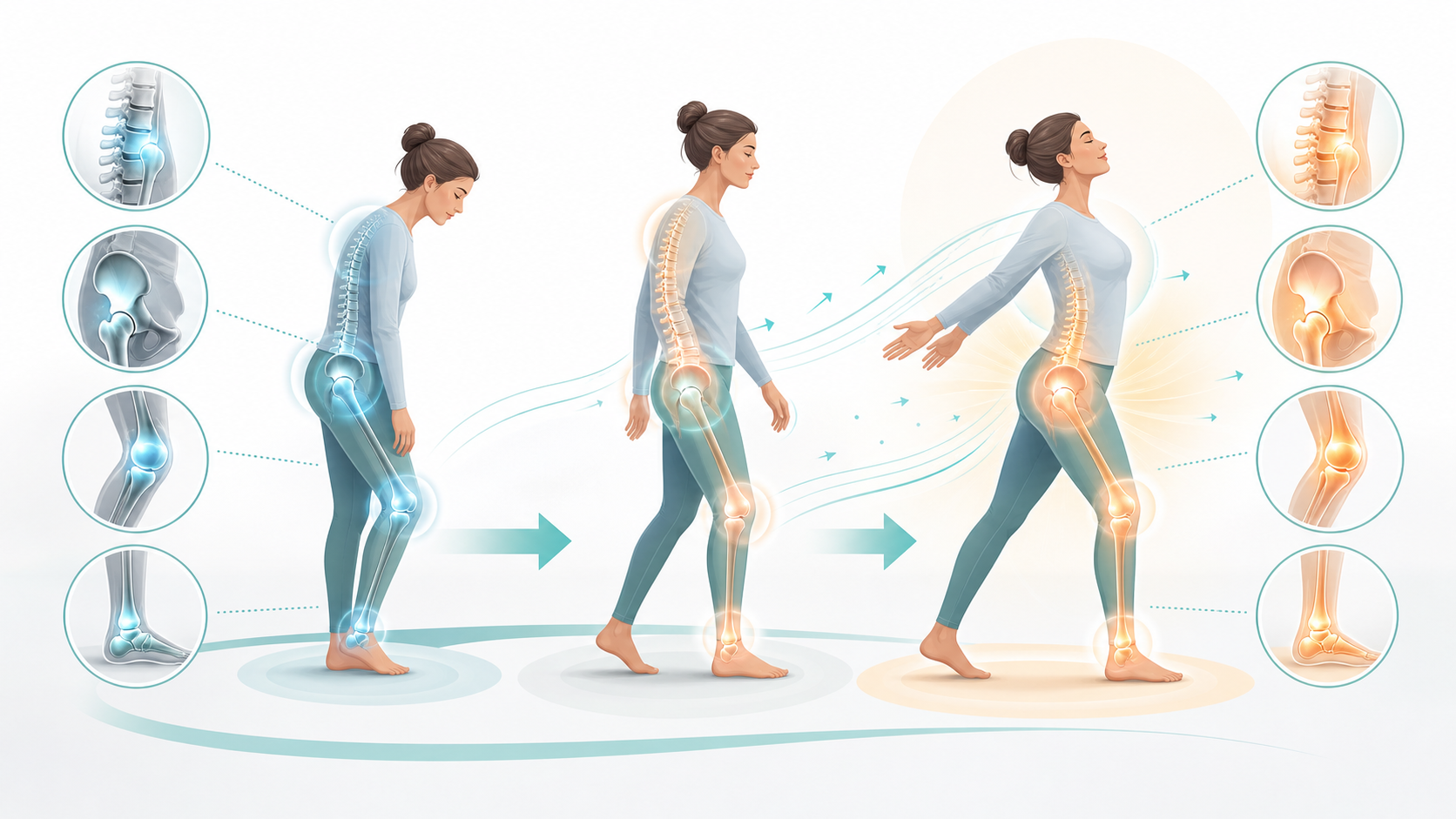
Why it often improves later
As you move, several things change. Blood flow increases. Joint surfaces get more motion. Muscles receive more feedback. The nervous system gets clearer information about where your body is in space. That can make movement feel smoother and less guarded.
This is why a person may feel stiff while getting out of bed, but more normal after a shower, short walk, or morning routine. It is also why stiffness can return after a long period of sitting. The body often likes variety more than it likes one perfect posture.
This pattern is similar to what many people notice during the workday. Our article on stiffness after sitting too long explains how long, quiet positions can make the first few movements feel heavier than they should.
When it is normal and when it is not
Short-lived stiffness that improves within a few minutes can be common, especially after a new activity, a poor sleep position, or a long day before. Stiffness that lasts longer, keeps returning, or comes with swelling deserves more attention.
- Stiffness that eases quickly with easy movement is often less concerning.
- Stiffness that lasts more than 30 to 60 minutes may need closer review.
- Swelling, warmth, redness, or a joint that looks different should be checked.
- Stiffness with numbness, weakness, fever, unexplained weight loss, or severe night pain needs medical attention.
If you have known arthritis, stiffness patterns can also shift with activity, stress, sleep, and overall health. A rehab plan should respect the joint while still keeping you as active and confident as possible.
A gentle morning reset
A morning reset should feel easy. It should help you enter the day, not become a workout. Start small and notice how your body responds.
- Before standing, take a few slow breaths and gently move ankles, knees, hips, or shoulders.
- Roll to your side before getting up if your back feels guarded.
- Take a short walk around the room or home before judging how stiff you really are.
- Use heat from a warm shower if it helps you move more comfortably.
- Avoid aggressive stretching first thing if it makes symptoms sharper.

Common areas that feel stiff
Morning stiffness often shows up in the neck, low back, hips, knees, ankles, and feet. Sometimes the area that feels stiff is not the only area involved. Hip mobility can affect the back. Foot and ankle stiffness can affect the knee. Upper back stiffness can affect the neck and shoulders.
That is why Sophysio looks at the whole movement pattern. If the first steps of the day bother your heel, the issue may be different from a stiff low back. Our article on heel pain in the morning explains why the first few steps can feel especially sensitive for the foot.
When to get checked
You should get checked when morning stiffness is new and significant, lasts longer than usual, is linked with swelling, or limits normal activities. You should also seek help if you are avoiding exercise, walking differently, or relying on the day to warm you up before you can function.
At Sophysio, care may include movement assessment, mobility work, strength planning, education, and manual therapy when appropriate. The goal is to help your body feel more prepared for the day with less guessing. You can book an appointment if morning stiffness is becoming a pattern.
FAQs
Your body has spent hours moving less. Joints, muscles, and the nervous system may need a few minutes of gentle movement before they feel ready.
No. Arthritis can cause morning stiffness, but so can sleep position, recent activity, muscle guarding, stress, and long periods of stillness.
Usually no. Start with easy motion and breathing. Strong stretching may irritate sensitive tissue if your body is not ready yet.
Get checked if stiffness lasts a long time, keeps getting worse, comes with swelling, or changes how you walk, work, exercise, or sleep.
Keep reading
- Why do I feel stiff after sitting too long?
- Why heel pain is often worse in the morning
- Rest or keep moving when something hurts