
 Services
 Conditions We Treat
 Contact
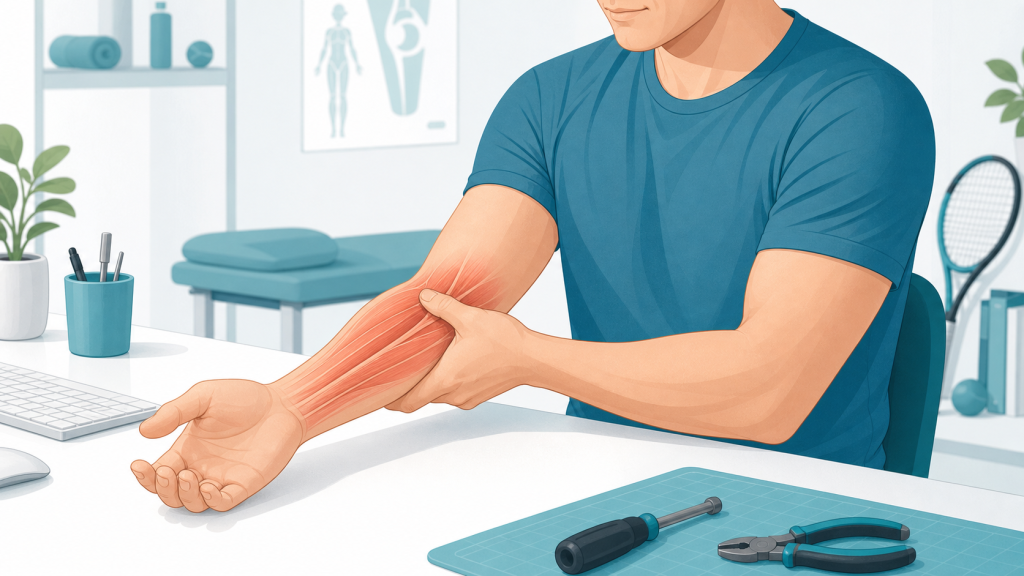
Forearm massage can be helpful for people who work with their hands, but it works best when it is gentle and paired with movement. If you type, grip tools, cook, lift, play tennis, or do hands-on work, your forearm muscles may get overloaded from repeated use. Manual therapy and physical therapy can help when tightness keeps returning.
The forearm controls much more than the wrist. It helps with gripping, typing, lifting, twisting, pinching, and stabilizing the elbow. When these muscles do too much without enough recovery, they can feel tight, achy, or heavy.
In this article
- Why forearms get tight
- How to use forearm massage safely
- Add movement so tightness does not return
- When forearm symptoms need help
Why forearms get tight
Forearm tightness often comes from repeated gripping or repeated wrist positions. Keyboard work, mouse use, tools, lifting, cooking, tennis, pickleball, and gardening can all load the forearm in slightly different ways.
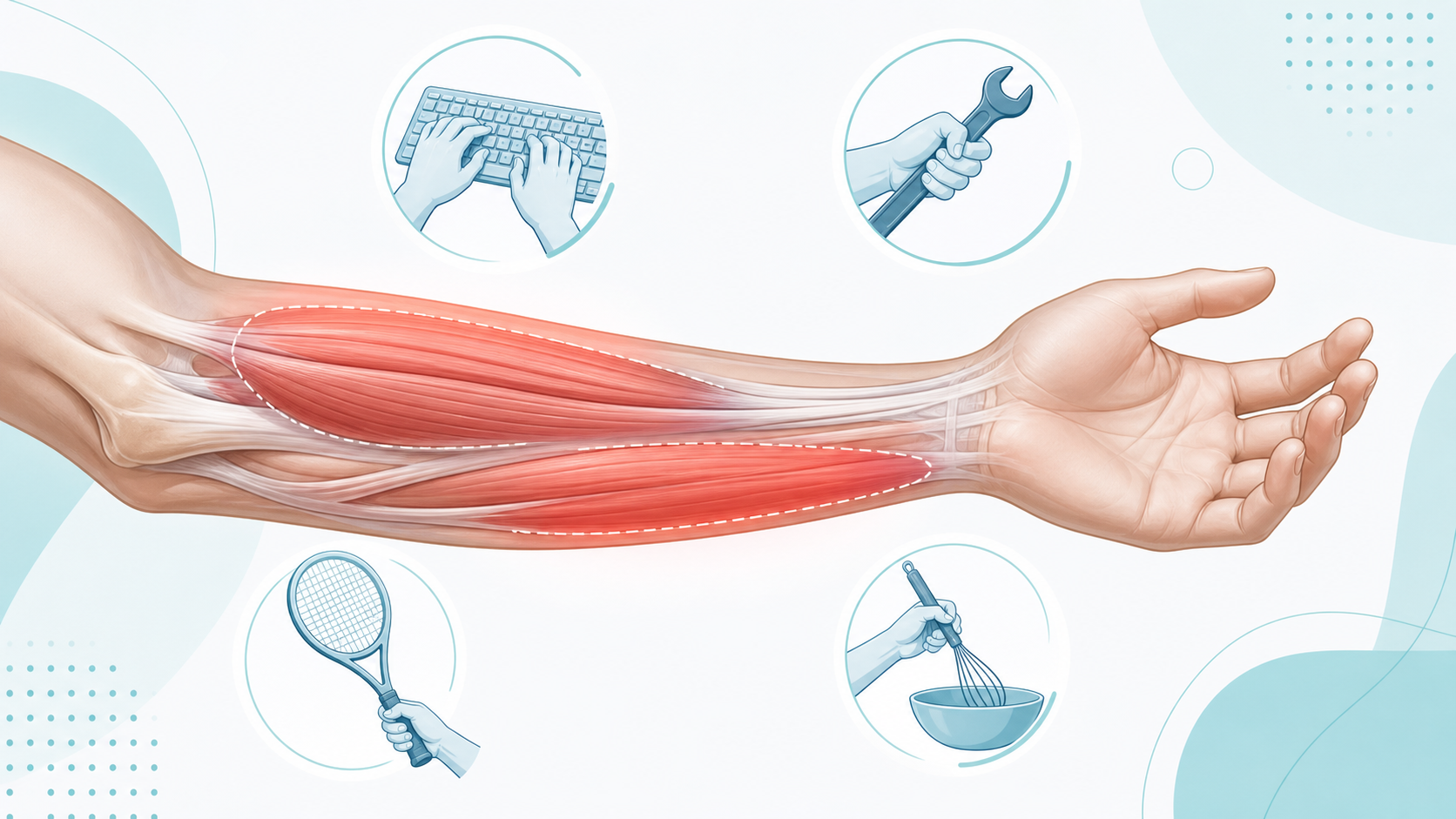
The muscles on the palm side of the forearm help with gripping and wrist flexion. The muscles on the back side help lift the wrist and fingers. If one group is overloaded or underprepared, symptoms may show up near the elbow, forearm, wrist, or hand.
How to use forearm massage safely
Forearm massage should not be a test of pain tolerance. Use gentle to moderate pressure and move slowly. The goal is to reduce tension, not bruise the tissue or chase pain.
- Rest the forearm on a table or your lap.
- Use the opposite hand to apply slow, comfortable pressure along the muscle.
- Spend 30 to 60 seconds on tight areas instead of digging aggressively.
- Stop if you feel sharp pain, numbness, tingling, swelling, or symptoms into the hand.
- Follow massage with light wrist, finger, and elbow movement.
Add movement so tightness does not return
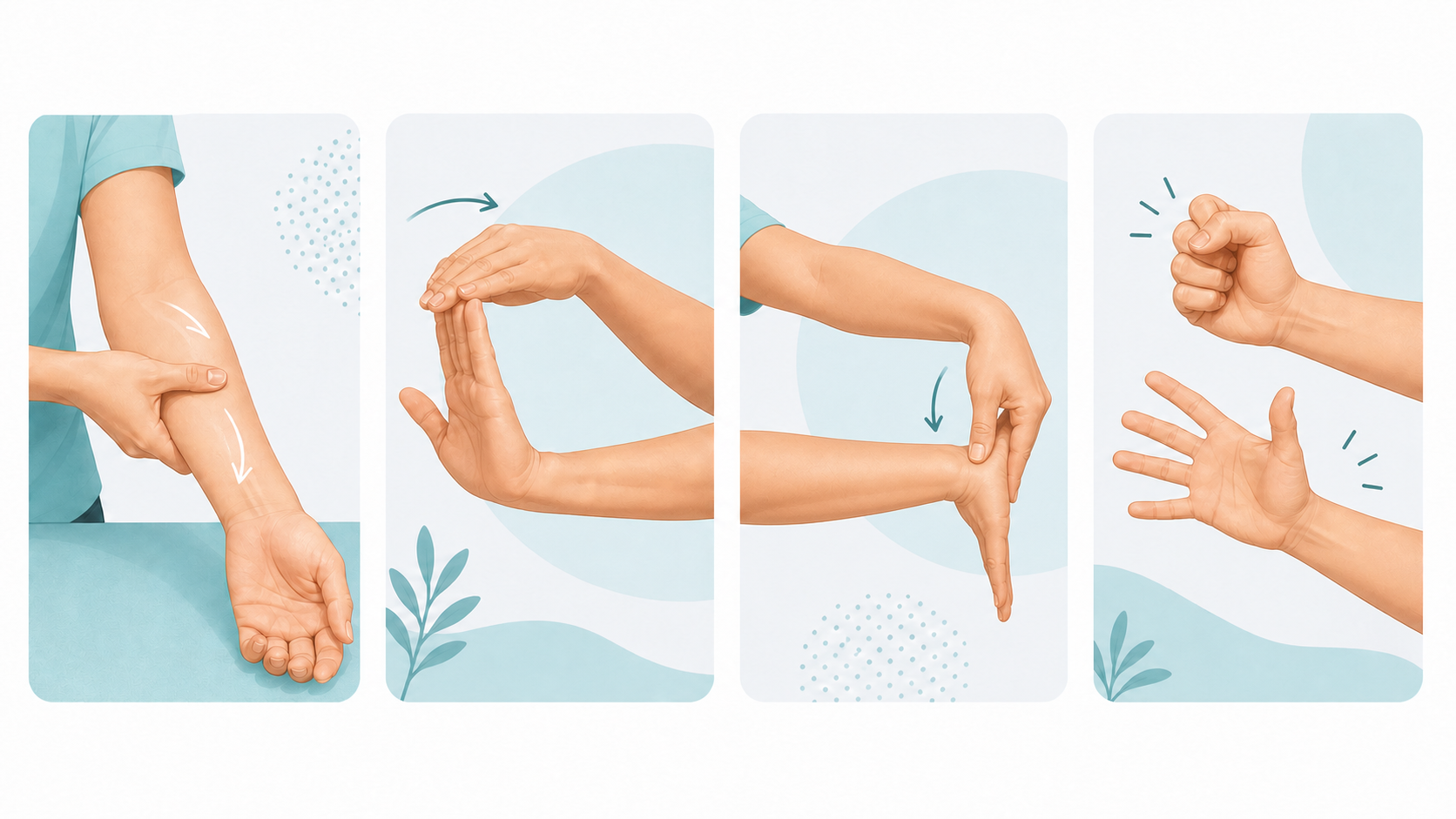
Massage can help you feel looser, but the forearm often tightens again if the workload does not change. Gentle wrist mobility, finger motion, grip endurance, and rest breaks can help the tissue tolerate daily work better.
Forearm tightness may also connect with tennis elbow, especially if pain is near the outside of the elbow. In those cases, the plan may need gradual strengthening and load management, not only massage.
When forearm symptoms need help
Get checked if forearm symptoms include numbness, tingling, weakness, swelling, sharp pain, dropping objects, or symptoms that do not improve with modified activity. You should also get help if pain keeps coming back every time you work, type, grip, or play.
FAQs
Gentle massage can help short-term tension, but it should be paired with movement, pacing, and strengthening if symptoms keep returning.
Use comfortable pressure. Deep or painful pressure is not required and may irritate sensitive tissue.
Yes. Repeated gripping and wrist use can contribute to elbow irritation, including tennis elbow patterns.
Stop if massage causes sharp pain, numbness, tingling, swelling, or symptoms into the hand.
Keep reading
If forearm tightness is affecting work, tennis, tools, or daily tasks, book an appointment with Sophysio or contact our team to ask about an assessment.
Sources
- AAOS OrthoInfo: Tennis elbow
- Cleveland Clinic: Repetitive strain injury
- NCBI Bookshelf: Lateral epicondylitis