
 Services
 Conditions We Treat
 Contact
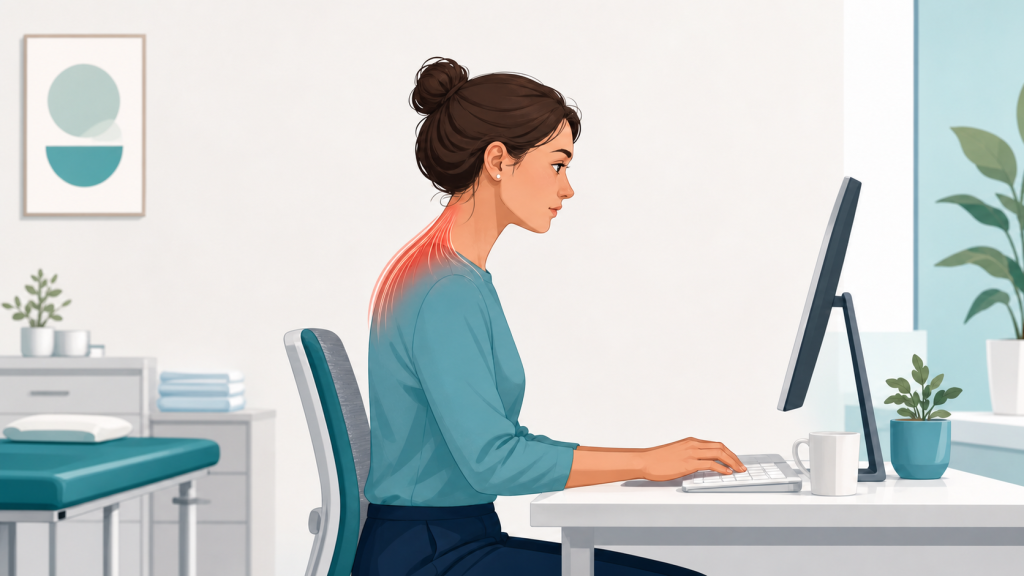
Tight traps are not always just a tight muscle problem. If your upper traps keep feeling tense after stretching, massage, or heat, the reason may be that your neck, shoulder blades, chest, jaw, breathing, and screen habits are asking the traps to do too much. That is where physical therapy can help look beyond the sore spot.
The upper traps are supposed to help with shoulder blade motion and neck support. The problem starts when they become the default muscle for stress, posture, reaching, typing, driving, or lifting. When that happens, they may feel tight because they are overworked, not because they simply need more stretching.
In this article
- Why traps can feel tight even after stretching
- Why it is not only a muscle problem
- What to try before stretching harder
- When to get help
Why traps can feel tight even after stretching
A muscle can feel tight for more than one reason. Sometimes it is shortened. Sometimes it is guarding. Sometimes it is tired from doing too much work. Upper traps often fall into that last category. They may feel tense because they are helping hold the head, support the shoulder blade, or compensate for weaker muscles around the upper back.
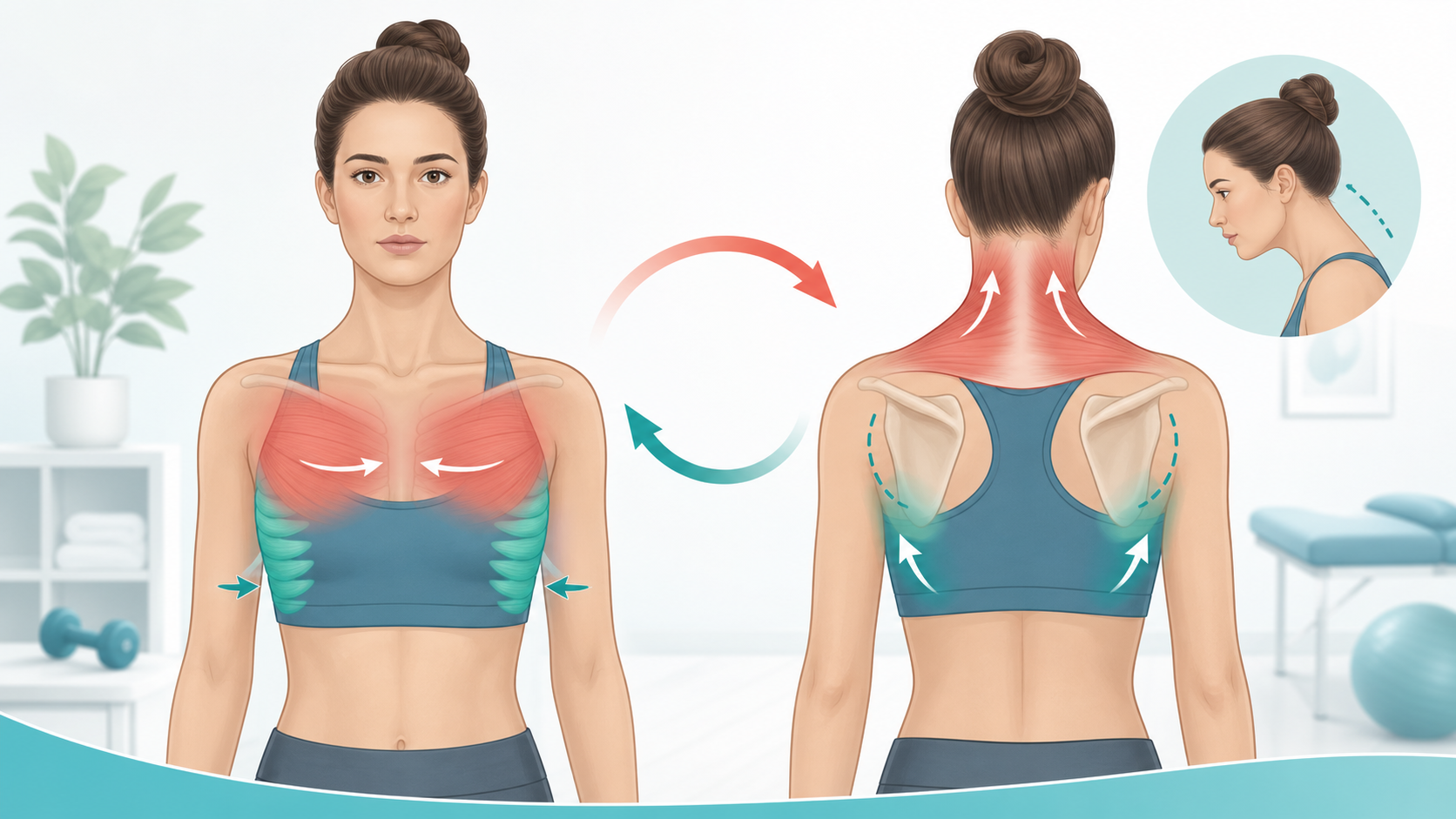
When the mid traps, lower traps, and serratus anterior are not sharing the load well, the upper traps can become the backup plan. Pec tightness can also pull the shoulders forward, which may make the neck and traps work harder to keep you upright. This is why trap stretching can feel good for a few minutes, then the tightness returns.
Why it is not only a muscle problem
Trap tension can be influenced by more than the shoulder. Jaw clenching, tongue position, shallow breathing, and visual strain can all change how the head and neck are held. A person who spends hours focusing on a screen may keep the eyes, jaw, and neck in a guarded pattern without realizing it.
This does not mean every tight trap problem comes from the jaw or eyes. It means the neck is part of a larger system. If the head is constantly forward, the chest is tight, the shoulder blades are not moving well, and the jaw is clenched, the traps may never get a real break.
What to try before stretching harder
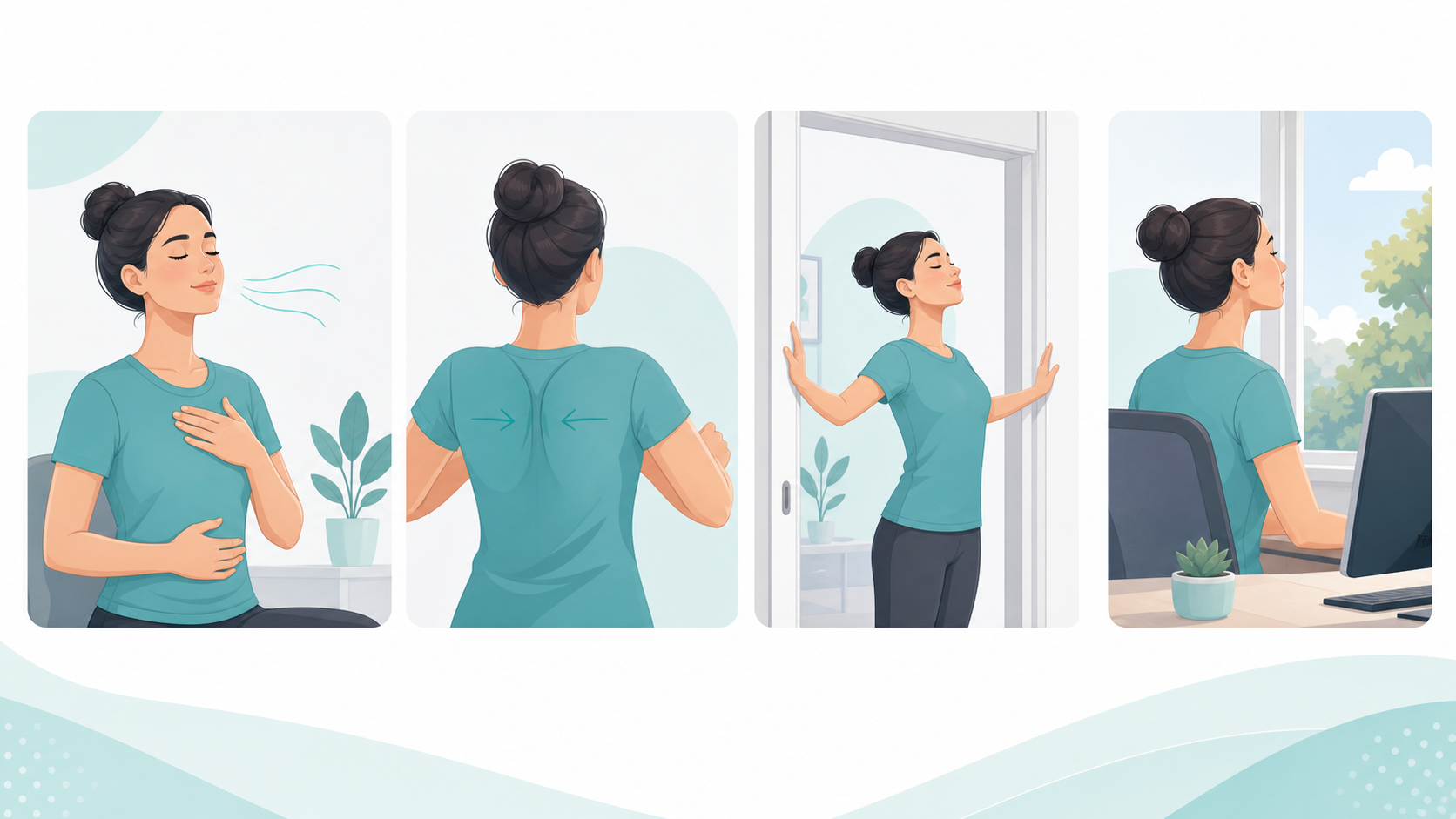
- Reset your breathing. Slow nasal breathing can help reduce neck guarding for some people.
- Move the shoulder blades. Gentle rows, wall slides, or scapular circles may help the upper traps stop doing all the work.
- Open the chest. A gentle doorway stretch can help if rounded shoulders are part of the pattern.
- Change your visual target. Look away from the screen, relax your jaw, and let your eyes focus at a distance.
- Strengthen, do not only stretch. Lower trap, mid trap, and serratus work can be important if symptoms keep returning.
If shoulder symptoms are also present, trap tightness may connect with shoulder impingement or rotator cuff injuries. In those cases, the goal is not only to relax the traps. It is to improve how the shoulder blade and arm move together.
When to get help
Consider getting checked if trap tightness is paired with headaches, arm symptoms, shoulder pain, weakness, numbness, tingling, or symptoms that keep returning despite movement changes. A therapist can assess neck mobility, shoulder blade control, chest mobility, breathing mechanics, and work posture.
FAQs
They may be overworking to support your head or shoulder blades, especially if other muscles are not sharing the load well.
Gentle stretching can help, but if tightness keeps returning, strengthening and movement control may matter more.
Posture can contribute, especially if you hold one position for long periods. The bigger issue is often lack of movement variety.
Yes. Physical therapy can look at neck motion, shoulder blade control, chest mobility, strength, and daily habits.
Keep reading
- How Your Shoulder Mobility Affects Your Tennis Serve
- Why Do I Feel Stiff After Sitting Too Long?
- Manual Therapy
If your traps keep tightening no matter how much you stretch, book an appointment with Sophysio or contact our team to ask whether a movement assessment is right for you.
Sources
- MedlinePlus: Neck injuries and disorders
- NCBI Bookshelf: Anatomy of the shoulder and upper limb
- AAOS OrthoInfo: Rotator cuff tears