
 Services
 Conditions We Treat
 Contact
Have a question? Call:
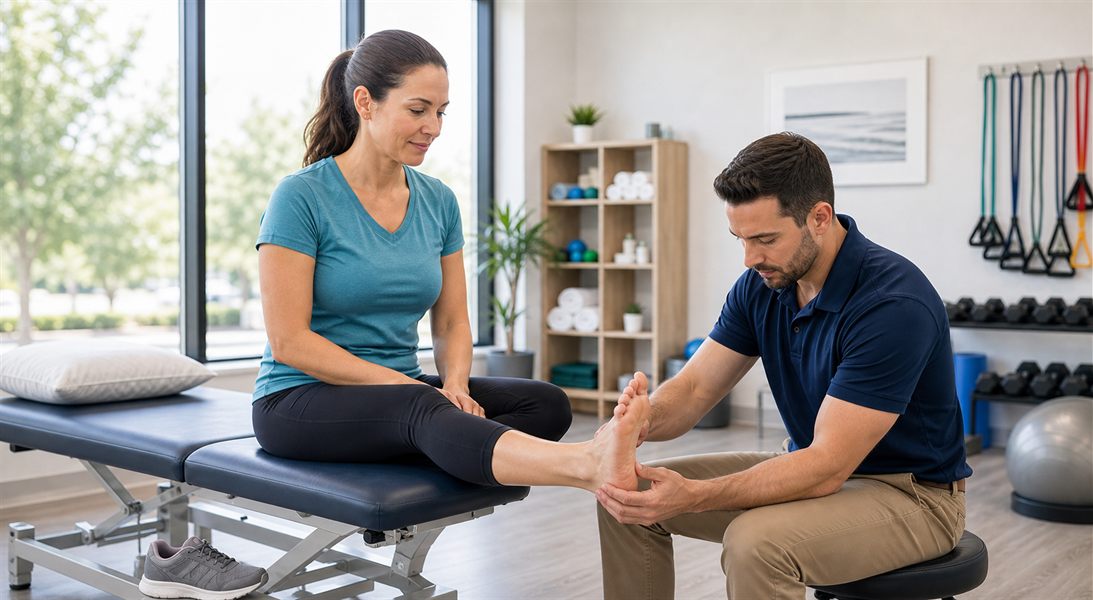
Relief for Heel and Foot Pain
Plantar Fasciitis
Personalized plantar fasciitis treatment in Boca Raton to help reduce heel pain, improve foot and ankle mobility, and return to walking with confidence.
- Heel Pain Relief
- Foot Mobility
- Calf Strength
- Gait Mechanics
- Arch Support Education
- Morning Step Comfort
- Balance & Loading
- Walking Confidence
- Boca Raton Plantar Fasciitis Care

Move With Less Pain
Physical Therapy for Plantar Fasciitis
Plantar fasciitis often causes heel or arch pain, especially with the first steps in the morning or after sitting. Therapy focuses on reducing irritation, improving foot and calf mobility, building strength, and improving walking tolerance.
Serving Boca Raton and nearby areas, Sophysio helps patients return to walking, exercise, work, and daily activity with a personalized foot and ankle plan.
Reduced Heel Pain
Improved Foot and Ankle Mobility
Better Walking Tolerance
Stronger Foot Support
Less Morning Stiffness
Personalized Foot Rehab
Move With Confidence
Therapy for Heel Pain, Arch Pain & Walking Limits
Plantar fasciitis can affect standing, walking, exercise, and work. Common issues we help with:
- Heel Pain
- Arch Pain
- Morning Foot Pain
- Pain After Sitting
- Calf Tightness
- Limited Ankle Mobility
- Walking Pain
- Running-Related Foot Pain
- Standing Tolerance Issues
- Foot Weakness
- Recurring Flare-Ups
- Return to Activity

Patient Information
Frequently Asked Questions
What is plantar fasciitis?
plantar fasciitis refers to heel or arch pain often linked to irritation of the plantar fascia and surrounding foot structures. A physical therapy evaluation helps identify how strength, mobility, posture, walking, and daily movement may be contributing.
Can physical therapy help plantar fasciitis?
Yes. Physical therapy may help plantar fasciitis by improving mobility, reducing irritation, rebuilding strength, and teaching safer ways to move during daily activity.
Do you treat plantar fasciitis in Boca Raton?
Yes. Sophysio helps patients with plantar fasciitis in Boca Raton and nearby areas including Delray Beach, Boynton Beach, and Deerfield Beach.
What happens during a plantar fasciitis evaluation?
Your therapist reviews symptoms, medical history, mobility, strength, movement patterns, activity goals, and what makes symptoms better or worse.
What treatment is used for plantar fasciitis?
Treatment may include calf and foot mobility, strengthening, load management, walking mechanics, footwear education, balance work, and a home exercise plan.
How long does recovery take?
The timeline depends on symptom severity, how long the issue has been present, your activity level, health history, and consistency with the plan.
Should I stop activity completely?
Not always. Some activities may need to be modified, but complete rest for too long can increase stiffness and weakness. Your therapist can help you find the right level.
Can plantar fasciitis come back?
It can, especially if the underlying strength, mobility, workload, or movement factors are not addressed. Therapy focuses on both relief and prevention.
Do I need imaging before therapy?
Not always. Many patients start with a physical therapy evaluation first. If symptoms suggest imaging or medical referral is needed, your therapist can guide next steps.
When should I seek urgent care?
Seek urgent medical care for severe trauma, rapidly worsening symptoms, major weakness, loss of bowel or bladder control, chest pain, fever, or symptoms that feel unusual and serious.